
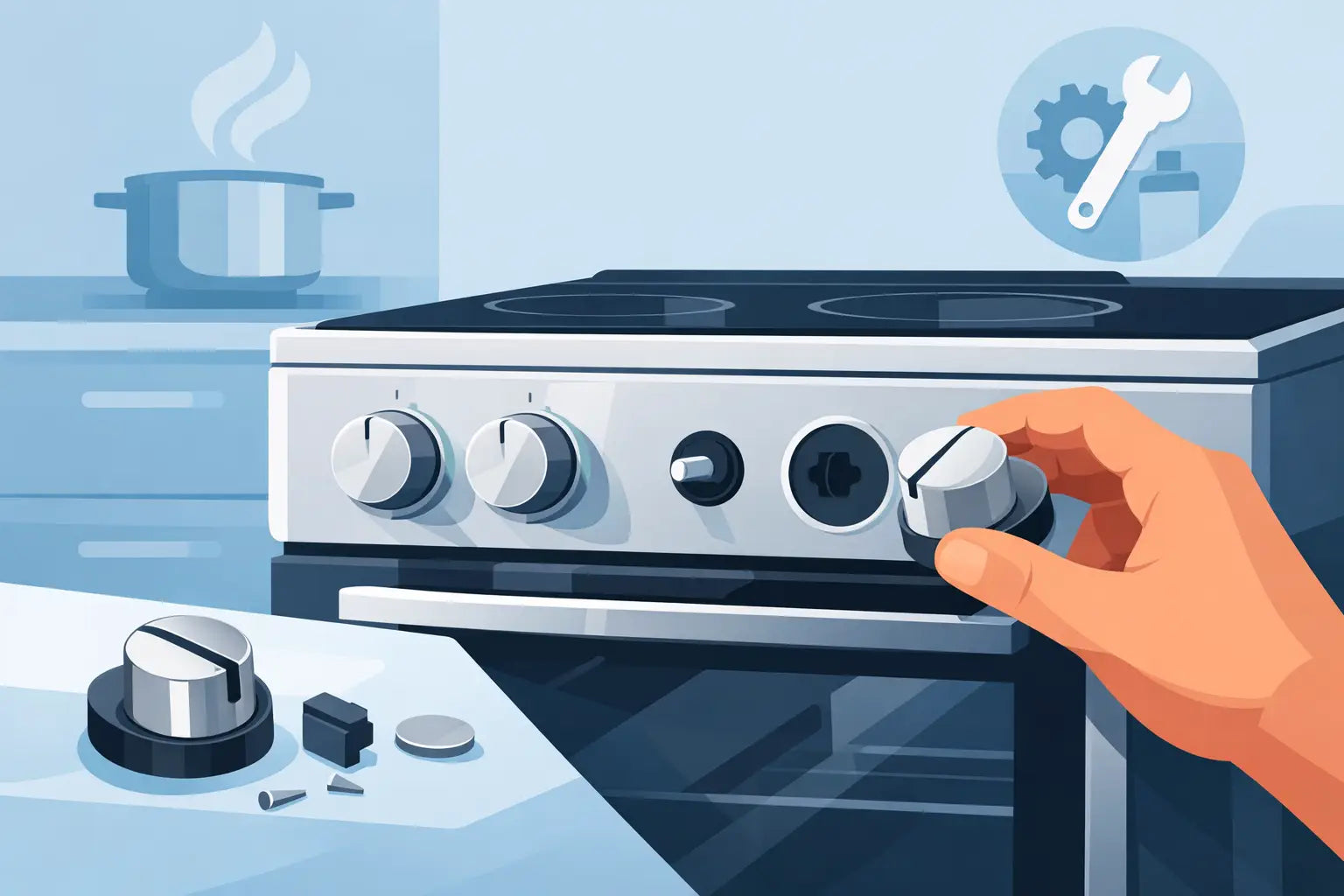
A loose, cracked or missing control knob can make a perfectly good cooker awkward to use. In many cases, a beko cooker knob replacement is all that is needed to get things back to normal without paying for a full repair or replacing the appliance. If the hob or oven still works but the control is worn, slipping or no longer turning correctly, changing the knob is often the quickest and most affordable fix.
That matters more than people think. Cooker knobs are used every day, and they take constant wear from heat, grease, cleaning products and repeated handling. Over time, the plastic can crack, the markings can fade, or the inner fitting can wear down so the knob stops gripping the shaft properly. When that happens, the cooker may still be fully serviceable, but using it becomes frustrating and less precise.
When a Beko cooker knob replacement is the right fix
The clearest sign is a knob that no longer turns the control smoothly or sits loosely on the spindle. You might also find that the printed temperature or burner markings have rubbed away, which makes day-to-day cooking harder than it should be. In some homes, a knob has simply snapped off or gone missing after cleaning, moving house or general use.
There is a difference between a faulty knob and a deeper fault in the cooker itself. If the knob pulls off easily and you can see visible damage inside the fitting, the part is likely the issue. If the knob is intact but the control underneath feels jammed, spins without resistance or does not change the heat setting, the problem may be with the switch, valve or thermostat rather than the outer knob. That is worth checking before ordering.
For many customers, the appeal is simple. Replacing one worn knob costs far less than replacing a control panel or calling out an engineer for a minor issue. It is also a sensible option when the cooker is otherwise in good condition and you just want it working properly again.
Finding the correct Beko cooker knob replacement
The main thing to get right is compatibility. Cooker knobs can look very similar at a glance, but small differences in fitting shape, shaft size, finish and marking position matter. Ordering by appearance alone can lead to a part that looks close but does not sit correctly or line up with the control markings.
The safest approach is to check the full model number from the appliance rating plate. On a Beko cooker, this is often found around the oven frame, inside the door area, on the side panel or at the back of the appliance. Once you have the model number, matching the part becomes much more straightforward.
This is especially useful because Beko has produced a wide range of freestanding cookers, built-in ovens and dual fuel models over the years. Some use silver knobs, some black, some white, and the fitting behind the knob can vary between models that look almost identical from the front. A model-specific match gives much better confidence than relying on guesswork.
If you are replacing more than one knob, it is worth checking whether the appliance uses identical controls throughout or whether one knob is different for the oven, grill or timer. On some models, the hob burner knobs match each other, while the oven temperature or function selector knob differs slightly in shape or printed indicator position.
What to check before you buy
A few quick checks can save time and avoid ordering the wrong spare. First, remove the damaged knob if possible and inspect the back. You may be able to compare the fitting type, any moulded part codes, and the exact shape of the insert. Second, count how many knobs you need. If one has failed through age and wear, the others may not be far behind.
Colour and finish also matter more than many people expect. A bright silver knob can look out of place against an older stainless steel fascia if the tone is slightly different. The same goes for white and black finishes. If appearance matters, it is worth confirming whether the replacement is an original style part, a compatible alternative or a universal option.
Universal knobs can be useful in some situations, but they are not always the best choice. They may fit a range of appliances, yet the look, feel and alignment are not always as clean as a model-specific replacement. If you want a tidy result and dependable day-to-day use, a part matched to your Beko model is usually the better route.
How to replace a Beko cooker knob
In most cases, replacing a cooker knob is straightforward. The old knob usually pulls off from the front of the control shaft, and the new one pushes into place. That said, it still pays to take care. Make sure the appliance is switched off before you start, and do not force the knob if it feels stuck.
If grease or baked-on residue has built up around the fitting, a gentle clean around the spindle can help. Once the old knob is removed, check the control shaft itself for signs of bending, cracking or heavy wear. If the shaft is damaged, fitting a new knob may not solve the problem fully.
When pushing the new knob on, line it up carefully so the fitting engages properly. It should feel secure without needing excessive pressure. Once fitted, test the movement gently through the settings. You are looking for a firm, consistent turn and correct alignment with the control markings.
This is usually a quick job, but there are cases where it depends on the condition of the appliance. If the control behind the knob is stiff, loose or not responding, the knob may only be part of the issue. In that situation, it is better to pause and check the underlying control component rather than keep forcing the new part.
Why cooker knobs wear out so often
Cooker knobs sit in one of the harshest spots in the kitchen. They are exposed to heat from ovens and hobs, steam from pans, cooking grease, regular wiping and everyday knocks. Over time, that combination weakens plastic parts and fades printed markings.
In busy family kitchens, wear happens faster. Controls are turned repeatedly every day, sometimes with wet or greasy hands, sometimes quickly when meals are being prepared in a rush. Even careful cleaning can contribute if strong products or abrasive cloths are used on the surface.
That is why a replacement knob is not just about appearance. A worn knob can make it harder to judge temperatures or burner settings accurately. For some households, especially older users or anyone who wants a cooker that is simple to operate, clear and secure controls make a real difference.
Choosing between original and compatible parts
There is no single answer that suits every customer. An original style part is often the first choice if you want the closest visual and functional match to the knob that came with the cooker. That can be helpful where appearance matters or where the control layout is specific.
A compatible replacement can still be a very practical option, especially if it is designed for the same model range and offers a reliable fit at a sensible price. For many buyers, that balance of affordability and function is exactly what they need. The key point is to focus on model compatibility first, not just the product photo.
For shoppers who want to get the cooker back into daily use quickly, clear matching information is what matters most. That is where specialist spare-parts retailers are useful, because the process is built around finding the right part rather than trawling through generic listings that may or may not fit.
Getting your cooker back to normal quickly
A faulty knob can make cooking more awkward than it needs to be, but it is usually one of the simpler appliance problems to put right. If the cooker itself is still working and the issue is limited to the outer control, replacing the knob is often the fastest path back to normal use.
The best results come from checking the model number, confirming the fitting and choosing a part that is made to suit your appliance. That avoids wasted time, unnecessary returns and the frustration of a knob that almost fits but not quite. For UK households trying to keep a reliable cooker going without overspending, that practical approach makes sense.
At Spares Direct Oldham, that is exactly the point of stocking everyday appliance spares - helping customers find the right replacement part quickly, so a small fault does not turn into a bigger and more expensive problem. A good knob should fit properly, turn cleanly and let you use your cooker with confidence again.