
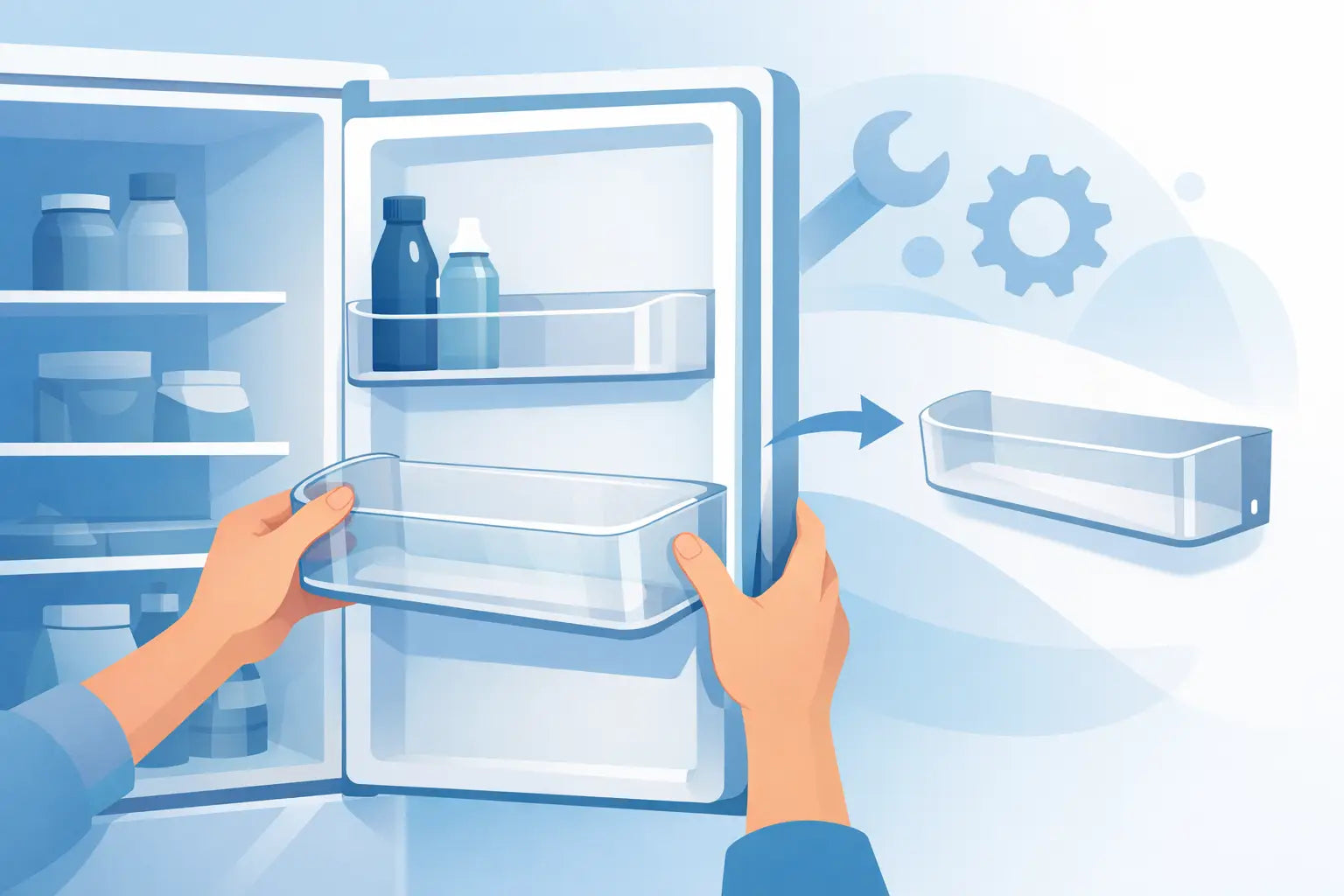
A cracked bottle tray usually becomes urgent the moment a four-pint milk bottle tips forward. That is why fridge door shelf replacement is one of the most common small appliance fixes - and one of the easiest to put right when you order the correct part first time.
Replacing a broken fridge door shelf is often far cheaper than replacing the whole appliance, and in most cases it takes only a few minutes. The tricky part is not fitting it. The tricky part is making sure the replacement matches your exact fridge model, because shelves that look nearly identical can still differ in width, depth, clips or moulding.
When a fridge door shelf replacement makes sense
If the shelf is split, warped, missing its end supports or no longer sits securely in the door liner, replacement is usually the sensible option. A damaged shelf can struggle to hold bottles, jars and cartons safely, and once the plastic starts to crack, it rarely improves with use.
Some people try glue as a temporary fix. That can work for a very light-load area, but fridge door bins are designed to carry weight. Milk, sauces, juice and condiments put constant stress on the plastic, especially when the door opens and closes throughout the day. A repaired shelf may last a week or two, or it may fail again without much warning.
A proper replacement is usually the better route if you want a reliable everyday fix. It keeps the fridge usable, avoids wasted food from spills, and helps you get more life out of the appliance without a large spend.
How to identify the right fridge door shelf replacement
The most important step is checking the appliance model number. This matters more than appearance, dimensions guessed by eye, or the brand name alone. Many manufacturers use several door shelf designs across similar-looking fridge ranges.
On UK fridges, the rating plate is commonly found inside the fridge compartment, behind a salad drawer, on the side wall, or sometimes near the crisper area. The model number may be a mix of letters and numbers, and there may also be a serial number nearby. For ordering parts, the model reference is the key detail.
Once you have that number, match it carefully against the shelf description. If a part listing mentions compatible models, check for an exact match rather than assuming a close version will do. A single extra letter at the end of a model code can mean a different shelf position or fitting style.
It also helps to check whether you need the top, middle or lower shelf. On some fridges, the shelves are different heights and depths. The bottom shelf is often deeper to hold bottles, while upper shelves may be shallower. Ordering a "door shelf" without confirming position can lead to delays and returns.
Measurements help, but they are not enough on their own
Width, depth and height can help narrow things down, especially if the old shelf is missing. Still, measurements should support model matching, not replace it. Two shelves can measure very similarly but attach differently at the back or sides.
If the original shelf has broken into pieces, keep those pieces until you have ordered the replacement. The shape of the ends, lip and base can all help confirm the correct part.
Common problems people run into
The biggest issue is ordering by brand only. Saying you need a shelf for a Beko, Bosch, Hotpoint or Samsung fridge is not enough, because each brand makes many variations. Another common mistake is assuming all clear plastic door bins are interchangeable. They are not.
There is also confusion between a full shelf assembly and a trim or flap. Some fridges have a bottle guard, front retainer or dairy compartment cover that is sold separately. If only the front bar has snapped, you may not need the full bin. On the other hand, if the side walls have cracked, the complete shelf is normally the better buy.
Wear and age can make identification harder. Older plastic may discolour, become brittle or distort over time, so the shelf you remove may not look exactly like the product photo. That is another reason model compatibility is more reliable than visual matching alone.
Fitting a fridge door shelf replacement
Most fridge door shelves are straightforward to fit. In many cases, you simply remove the damaged shelf by lifting and pulling it clear, then slide or clip the new one into place. No tools are usually needed.
Before fitting the replacement, wipe down the door grooves or support channels. Small bits of broken plastic, sticky residue or grime can stop the shelf sitting properly. If the new shelf feels stiff, do not force it. Check alignment and compare it with the original position.
Once fitted, test it gently before loading it up. Place a lighter item on the shelf first, open and close the door a few times, and make sure the shelf stays secure. After that, you can return heavier items such as bottles.
Check the door liner as well
If a new shelf does not sit correctly, the problem may not be the shelf itself. Sometimes the inner door liner or mounting points have cracked. In that case, even the correct replacement may not hold firmly. It is worth inspecting the door where the shelf connects, especially if the old bin failed after a knock or impact.
Is it worth replacing an old fridge shelf?
Usually, yes - but it depends on the overall condition of the appliance. If the fridge is cooling properly and only the door shelf is damaged, replacement is an easy and cost-effective fix. For many households, spending a modest amount on the right spare is far more practical than shopping for a new fridge.
If the appliance has several faults at once - for example poor cooling, damaged drawers and a broken shelf - the calculation changes. You may still choose to repair it, but it becomes more about the age, brand and general condition of the fridge.
For most people dealing with one broken bin, the answer is simple. Replacing the shelf restores day-to-day use quickly and avoids the mess and inconvenience of unstable storage.
Buying the part without wasting time
The fastest route is to search using the full model number and the part type you need. Terms like bottle shelf, door bin, lower door tray and fridge door shelf are often used interchangeably, so it helps to check product wording carefully.
Look for clear compatibility information, part photos and dimensions where available. If more than one similar option appears for your appliance range, slow down and compare them. A minute spent checking now is better than waiting for a part that does not fit.
That is where a specialist spares retailer can save time. A catalogue built around model matching is much more useful than guessing from generic listings, particularly for popular UK appliance brands and harder-to-find replacements. Spares Direct Oldham focuses on practical, model-specific parts that help customers get everyday appliances back in use quickly.
Fridge door shelf replacement for tenants, families and older appliances
This type of repair suits more people than you might think. Tenants often want a simple fix that avoids landlord disputes over accidental damage. Families need a shelf sturdy enough for daily use, especially in busy kitchens where the fridge door gets opened constantly. Owners of older appliances often struggle most, because cosmetic plastic parts are the first to break and the hardest to match without the model details.
The good news is that a missing or broken shelf does not automatically mean the fridge is finished. Many appliances have years of service left in them, and replacing one damaged part can make a big difference to how practical the fridge feels every day.
If you are ordering for an older model, allow a little extra care with the identification. Manufacturers may have revised the same appliance over time, and replacement parts are sometimes listed under updated numbers. Again, exact compatibility matters more than what looks close enough.
A small part that makes a big difference
Fridge door shelves do a lot of unnoticed work until one gives way. Then every bottle feels awkward, every jar is in the wrong place, and the whole appliance becomes more annoying than it should be. Getting the correct replacement fixes that quickly.
Take a moment to check the model number, confirm the shelf position and match the part properly. It is a simple repair, but getting it right first time is what saves money, effort and another round of searching.