
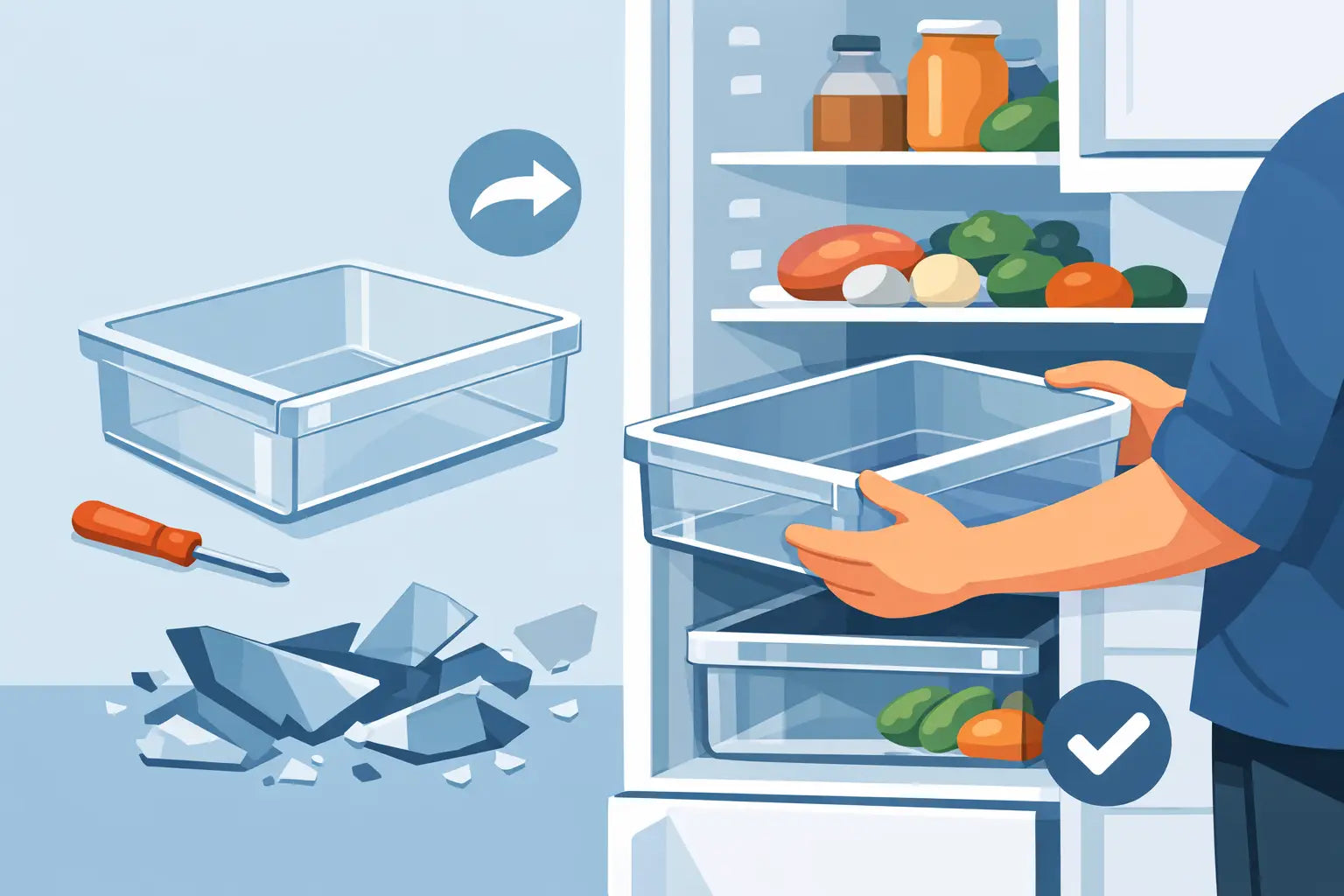
A cracked salad drawer usually starts as a small annoyance. Then the front panel comes loose, the drawer sticks every time you open it, and before long you are lifting it out with both hands just to stop it scraping the shelf. If you are wondering how to replace fridge drawers without wasting time or ordering the wrong part, the good news is that the job is usually simple once you have the correct model details.
Replacing a fridge drawer is often far cheaper than replacing the appliance, and it can make a noticeable difference to how your fridge works day to day. Drawers support food properly, help separate fresh items, and on many models they also play a part in airflow and temperature control. A poor fit can lead to rattling, jamming or gaps that affect performance, so getting the right replacement matters.
How to replace fridge drawers without ordering the wrong part
The most important step comes before you buy anything. Fridge drawers are rarely universal, even when two models look almost identical from the front. The shape of the runners, the depth of the drawer, the style of the front panel and the fixing points can all vary between brands and even between versions of the same range.
Start by finding the appliance model number. On most fridges, this is on a rating plate inside the cabinet, often on the side wall behind the salad drawers or near the lower shelf area. Sometimes it is tucked behind a crisper bin or near the door seal. Write it down exactly as shown, including any letters, dashes and version codes.
If the old drawer is still in one piece, check it closely as well. Some drawers or fronts carry a part reference moulded into the plastic. That can help confirm compatibility, especially if your fridge has several drawers that look similar but are slightly different sizes.
Photos can help, but they should not be your only guide. A clear image of the broken drawer next to the model number label gives you a much better chance of matching the part correctly than guessing based on appearance alone.
Check whether you need the full drawer or just the front
One reason people get stuck is that they order more than they need, or the wrong section entirely. On many appliances, the transparent bin and the outer front are separate parts. If only the flap, handle section or drawer face has cracked, you may only need a replacement front rather than the complete drawer body.
That matters for cost as well as fit. A drawer front is usually cheaper to replace and simpler to post, but it does need to match the exact fixing design of your existing bin. If the whole drawer base has split, the side wall has snapped or the runners are damaged, then a full replacement is the better option.
This is where model-specific matching saves time. A part that is described clearly by brand, model range and drawer position is far less likely to cause problems when it arrives.
Before fitting the new drawer
Once your replacement arrives, take a minute to check it before removing packaging completely. Compare the width, depth, front shape and runner grooves against the old part. Minor visual differences in the plastic finish are not always an issue, but the core shape and connection points should be the same.
Empty the damaged drawer and remove any nearby items from the shelf above. This gives you room to work and reduces the chance of dropping food or catching the new drawer on a glass shelf edge. If the old drawer is cracked badly, lift it carefully from underneath because brittle plastic can break further when pulled forward.
If there are loose pieces of plastic in the base of the fridge, remove them before fitting the new part. Small fragments can obstruct the runners and make it seem as though the replacement does not fit properly.
How to replace fridge drawers step by step
In most cases, the process is straightforward. Pull the old drawer forward until it stops, lift the front slightly and slide it out. Some drawers come free easily, while others need a firmer upward tilt to clear the guide rails. Do not force it sharply, especially if there is a shelf lip above.
Once the drawer is out, inspect the runner area inside the fridge. Wipe away any spills, sticky residue or bits of broken plastic. If food packaging has slipped underneath the rails, remove that too. A new drawer can still jam if the track is dirty.
If your replacement includes a separate front panel, attach it according to the same arrangement as the original. This usually involves slots or clips along the front edge of the drawer body. Make sure both sides are seated evenly. If one side is not properly clipped in, the drawer can twist when loaded.
To fit the new drawer, align the side grooves or base edges with the internal runners and slide it back slowly. It should move smoothly with light pressure. If it catches immediately, pull it out and check the alignment again. Pushing harder is rarely the answer and can crack the new plastic at the fixing points.
Once inserted, open and close the drawer several times. It should travel evenly, sit level and close fully without rubbing. If your fridge has a hinged crisper cover or glass shelf resting above the drawer area, check that this remains seated correctly after the drawer is installed.
Common problems when replacing fridge drawers
The most common issue is ordering by appearance instead of model number. Fridge drawers can look interchangeable online, but a few millimetres in height or depth is enough to stop them sliding properly. If the drawer feels too tight or leaves a visible gap when shut, compatibility is the first thing to recheck.
Another problem is damage elsewhere in the compartment. If the shelf above has not been placed back in the right position, the drawer may scrape underneath it. If an internal rail or support inside the fridge liner is cracked, even the correct replacement drawer may not sit properly. In that case, the fault is not the drawer itself.
There is also a difference between fridge drawers and freezer drawers, and the names are often used interchangeably by mistake. A freezer drawer front, flap or basket will be built differently from a fridge salad bin, even if the plastic finish looks similar. Always check whether the part is for the chilled section or the frozen section.
When a repair is worth doing
For most households, replacing a drawer is an easy decision. It keeps the appliance tidy, prevents further breakage and avoids the cost of living with missing storage space. If your fridge is otherwise working well, fitting a new drawer is a practical repair that restores normal use in minutes.
The only real grey area is with very old appliances where several internal parts are damaged at once. If drawers, shelves, door balconies and trims all need replacing together, the overall cost can add up. Even then, many people still prefer repairing because it is quicker and cheaper than shopping for a new appliance, arranging delivery and disposing of the old one.
For a single cracked or missing drawer, replacement is usually the sensible route.
Getting the right part first time
The fastest repair is the one where the part matches first time. That means using the exact model number, checking whether you need a complete drawer or just the front, and comparing the position of the drawer within the fridge if there is more than one. Upper and lower drawers are not always the same.
If your fridge is from a major brand such as Beko, Bosch or another common household make, there is a good chance that model-specific replacements are available without much delay. Retailers that specialise in domestic spares tend to make this process easier by listing compatibility clearly and focusing on practical replacements rather than vague generic parts. That is exactly why many customers use Spares Direct Oldham when they need a quick, affordable match for everyday appliance parts.
A fridge drawer may not seem like a major component, but when it breaks you notice it every day. Get the correct replacement, fit it carefully, and your fridge goes back to doing its job without fuss.