
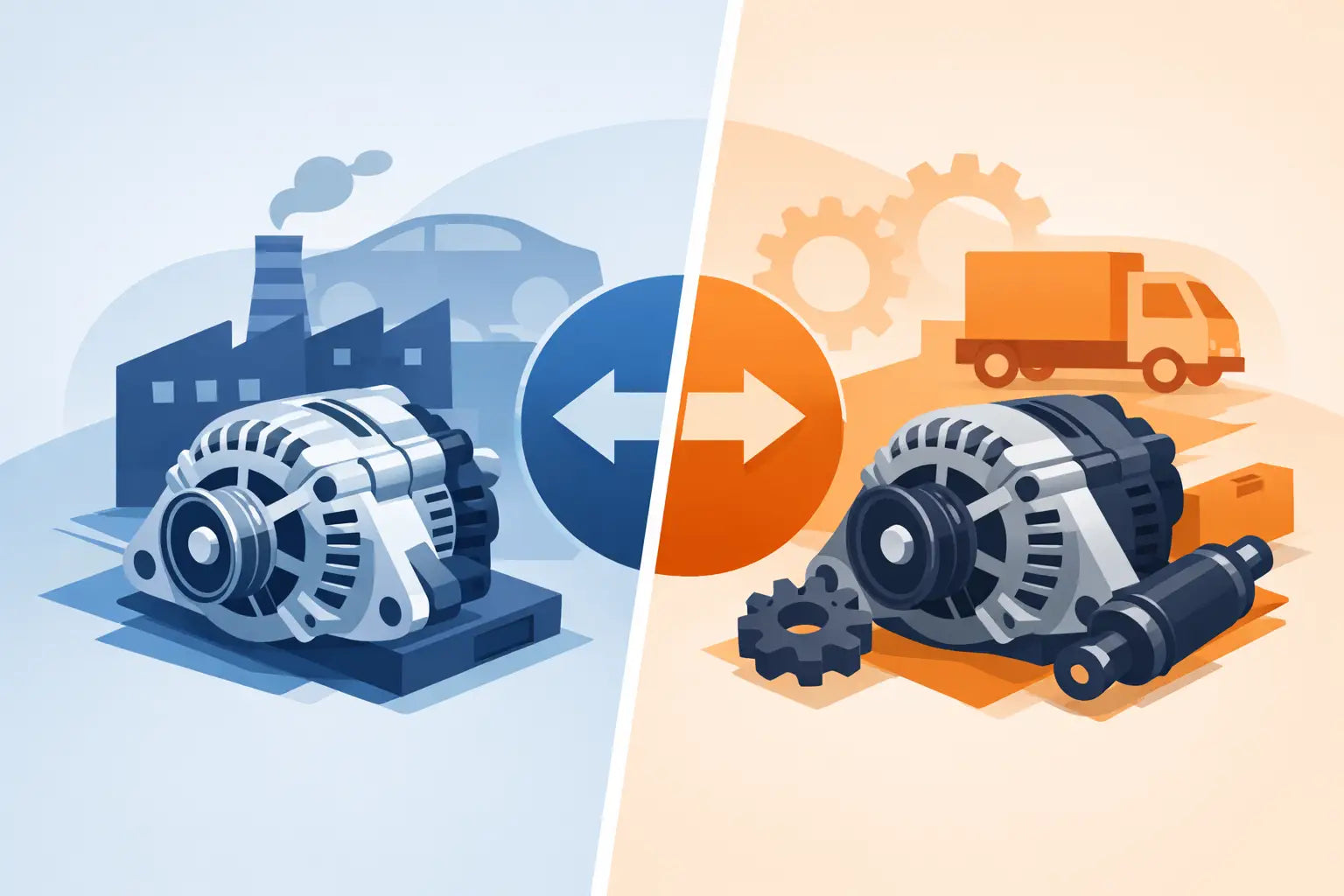
When a remote stops working or a fridge drawer front cracks, the question usually is not whether you need a replacement. It is whether to buy OEM parts versus compatible parts. For most households, that choice comes down to three things - fit, price and how quickly you can get the right part without turning a simple repair into a drawn-out search.
OEM parts versus compatible parts - what is the difference?
OEM stands for Original Equipment Manufacturer. In plain terms, an OEM part is made by the original brand, or made for that brand to its exact specification, for use with a specific product. If you buy an original Samsung remote for a Samsung television model, that is an OEM part.
A compatible part is made by another manufacturer but designed to work with the original product. That might be a replacement LG TV remote built to operate the same functions as the original, or a freezer drawer front shaped to fit a certain appliance model even though it is not branded by the original maker.
That distinction matters, but it does not automatically mean one option is always better. In spare parts, the best choice often depends on what the part does, how exact the fit needs to be and how much you want to spend.
Why many customers compare OEM parts versus compatible parts
Most people are not shopping for spare parts as a hobby. They want the telly working again, the washing machine back in use, or the fridge sorted before it becomes a bigger nuisance. That is why the comparison between OEM parts versus compatible parts is usually practical rather than technical.
An OEM part gives reassurance because it is the original specification. For some buyers, that is enough reason on its own. If you want the closest possible match to the part that came with the appliance or device, OEM is often the straightforward route.
Compatible parts appeal for equally sensible reasons. They are often easier to source, more affordable and perfectly suitable for everyday use. In many cases, especially with replacement remotes, a well-matched compatible part does the job without any compromise that the average household will notice.
When OEM parts make the most sense
OEM parts are often the safer option when the exact design, finish or function matters. If a part must line up precisely, match original fittings or maintain the manufacturer’s intended performance, OEM can remove a lot of guesswork.
This is especially relevant for buyers who want a like-for-like replacement. An original remote may have the same button layout, branding and shortcuts as the one that came in the box. For some customers, particularly older users or anyone who does not want to relearn a different layout, that familiarity is worth paying for.
OEM can also be the better choice when you are dealing with newer products or more specialist parts. If the appliance is still relatively current, or if there is a feature that relies on exact manufacturer specification, sticking with the original can feel more predictable.
That said, OEM is not always the quickest or cheapest option. Original parts can cost more, and in some cases they are harder to find, especially for older or discontinued models.
When compatible parts are the better buy
Compatible parts tend to make the most sense when you need a reliable replacement without paying a premium for original branding. For many common household fixes, that is a completely reasonable approach.
Take remote controls. A good compatible remote is often the most practical answer when the original has been lost, dropped too many times or simply worn out. If it is designed for your exact make and model, or it is a tested compatible replacement, it can restore full use quickly and at a lower cost.
The same applies to selected appliance parts. If a compatible freezer drawer front, washing machine component or fridge spare is made to fit the model correctly, many customers are happy to choose value over branding. The appliance works, the problem is solved and there is no need to replace the whole unit for the sake of one damaged piece.
For older appliances, compatible parts can be particularly useful. Once original stock becomes limited, a quality compatible option may be the difference between repairing the item and giving up on it.
Fit matters more than the label
The biggest mistake shoppers make is focusing on OEM versus compatible as if the label tells the whole story. It does not. The more important question is whether the part is truly suitable for your exact model.
A genuine part that fits a different version is still the wrong part. A compatible part matched carefully to your model number is far more likely to solve the problem first time.
That is why model numbers matter so much when buying spares. A Panasonic remote for one television range may not work properly with another. A Bosch replacement part may look right at a glance but still differ in size, fitting points or design. The closer the part is matched to the appliance reference, the less chance of wasted time and returns.
For everyday buyers, this is the practical rule to follow: do not buy based on appearance alone. Check the brand, full model number and any compatibility notes before ordering.
Price, lifespan and value
Price is one of the main reasons people choose compatible parts, and often with good reason. If the replacement costs less and performs as needed, it can be the smarter purchase.
But value is not just about the lowest price. It is about whether the part works properly, lasts reasonably well and saves you from replacing the full appliance or device. A cheap part that does not fit is poor value. A compatible part that works straight away and keeps your appliance going is often excellent value.
OEM parts may offer extra reassurance on build quality or finish, but compatible parts have improved significantly over the years. Many are produced specifically to meet demand for older or popular household models, and for routine use they can be more than adequate.
This is where expectations matter. If you want the exact original look and feel, OEM may justify the extra spend. If you want a practical fix at a sensible price, compatible is often the more attractive option.
What to look for before you buy
Before ordering any spare part, it helps to think about how the product will be used. A remote control needs reliable button response, sensible layout and confirmed compatibility. An appliance part needs the right dimensions, connection points and model match.
Clear product descriptions make a big difference. Good spare-parts listings should tell you which brands and models a part fits, whether it is original or compatible, and what function it is designed to replace. That kind of information reduces uncertainty and helps customers buy with confidence.
It also pays to be realistic about urgency. If the television is unusable without a remote, or a broken fridge part is causing daily aggravation, speed matters. In those cases, the best option is often the one that is in stock, clearly matched to your model and ready for fast dispatch.
There is no single right answer
Some articles try to force a winner between OEM and compatible parts, but that is not how real households shop. The better option depends on the product, the part and what matters most to you.
If you want original branding, exact familiarity and the closest possible match to what came with the appliance, OEM may be the right choice. If you want a cost-effective replacement that gets the job done quickly, a properly matched compatible part can be just as sensible.
For many customers, the decision is simple. They want the right part, at a fair price, without spending hours searching through vague listings. That is why specialist spare-parts retailers matter. When compatibility is clear and stock covers both common and harder-to-find models, the choice becomes much easier.
Spares Direct Oldham serves that practical need well, especially for replacement remotes and everyday appliance parts where speed, fit and affordability matter more than jargon.
The useful way to think about it is this: do not start with the badge on the part. Start with the appliance in front of you, the model number on the label and the result you need by the end of the week.