
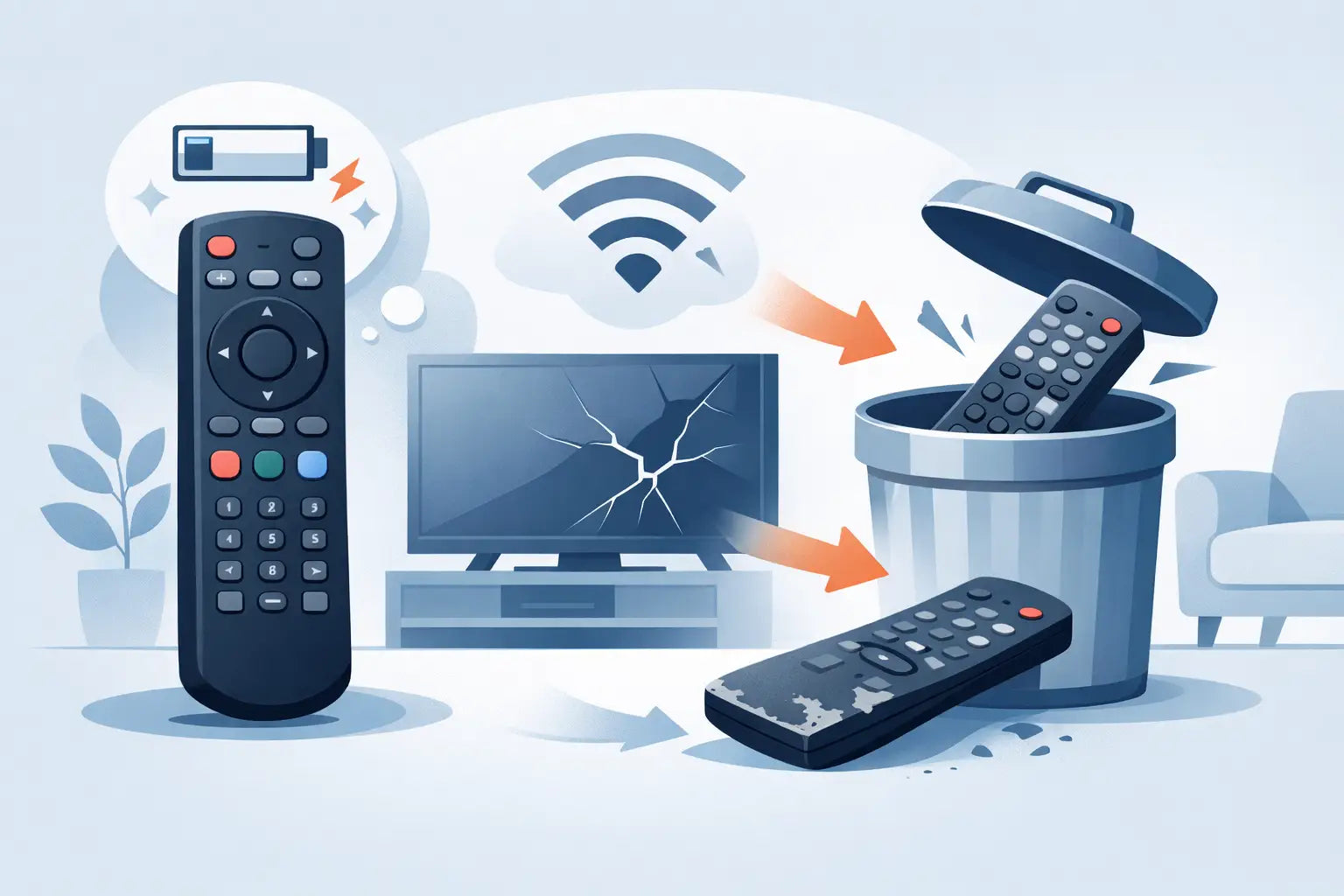
You usually notice the top signs a remote needs replacing at the worst possible moment - when the telly will not respond, the volume keeps jumping, or you are pressing the same button five times just to change channel. A faulty remote is a small problem, but it quickly becomes a daily annoyance. In many cases, replacing it is faster, cheaper and less frustrating than trying to live with one that only works when it feels like it.
For most households, the remote gets heavy use. It is picked up every day, dropped down the sofa, covered in dust, and passed around between family members. Over time, even a well-made handset starts to wear out. The key is knowing the difference between a simple battery issue and the point where a proper replacement makes more sense.
Top signs a remote needs replacing rather than fixing
The first thing most people try is swapping the batteries. That is always worth doing. If fresh batteries do not solve the problem, the remote itself is often the issue.
One of the clearest signs is inconsistent response. If the TV only reacts occasionally, or only when you stand very close, the signal may be weakening. That can happen as internal components wear down with age. You might still get some function from it, but if you are having to aim carefully from one exact spot in the room every time, it is not working as it should.
Another common problem is unresponsive buttons. Usually, this starts with the buttons you use most - power, volume, channel, OK, or navigation arrows. They may feel soft, stick slightly, or need a hard press before anything happens. Once that wear sets in, it rarely improves. Cleaning can help if there is surface dirt, but if the contacts underneath are worn, the remote is already on borrowed time.
You may also notice delayed commands. Press volume once and nothing happens, then suddenly it jumps three levels. Press guide and wait two or three seconds for a response. That lag can make a remote more irritating than useful. If the TV itself is working normally and the delay only happens through the handset, replacement is usually the practical answer.
Physical damage is often a clear warning sign
A cracked casing is not just cosmetic. If the remote has been dropped a few times and the body is split, the inside may no longer sit properly. Battery contacts can loosen, buttons can shift out of line, and the signal board can become unreliable. Some remotes will carry on for a while after a drop, but repeated impact tends to cause bigger issues over time.
Battery corrosion is another red flag. If old batteries have leaked inside the compartment, you may see white or green residue on the terminals. Mild corrosion can sometimes be cleaned, but if the metal contacts are badly damaged, power flow becomes unreliable. That leads to intermittent operation, even with new batteries fitted.
Water damage is even less forgiving. A remote that has had tea, juice or any other liquid spilled on it may still appear to work at first. Then the buttons begin sticking, certain functions stop responding, or the handset fails altogether. Once moisture gets inside, there is no guarantee it will recover fully.
When button wear becomes too frustrating
Heavy use tends to wear some buttons much faster than others. On many TV remotes, the power button, volume controls, directional pad and streaming service shortcuts are the first to go. If one or two less important buttons stop working, you may cope for a while. But once core controls start failing, everyday use becomes awkward.
This is where it depends on the age and type of remote. If you have an older original handset for a discontinued TV model, you might be tempted to keep nursing it along. That makes sense if it only needs a clean and the casing is still sound. But if several buttons are failing together, there is a point where replacing it saves time and effort.
A worn remote also tends to get worse gradually, not suddenly. People often put up with it for weeks or months, pressing harder and harder until using the TV becomes a chore. If that sounds familiar, you are probably already past the point where a replacement is the better option.
Top signs a remote needs replacing for compatibility reasons
Not every remote fails because it is broken. Sometimes the issue is that it is no longer the right fit for the setup you are using. If you have replaced your television, switched brands, or ended up using a generic remote that only controls basic functions, it may never give you full access to menus, smart features or recordings.
That matters more than people expect. A remote might turn the TV on and off but still leave you unable to use source selection, settings, guide, subtitles or app navigation properly. In that case, the remote is not faulty in the usual sense, but it still needs replacing if you want full control again.
This is especially relevant for households using replacement handsets picked up years ago as a quick fix. Some universal remotes are perfectly adequate, but others only offer partial compatibility. If you are missing functions you use regularly, a model-specific replacement is often the simplest fix.
Simple checks before you replace it
Before ordering a new remote, it is worth ruling out the obvious. Start with fresh batteries from a reliable pack, fitted the correct way round. Check the battery compartment for dirt or corrosion. If the terminals look clean, test the remote again at a normal distance from the TV.
Next, make sure the problem is not the television sensor itself. If the TV responds normally to its side controls or another remote, then the original handset is the likely issue. You can also check for blocked signals. Decorative covers, cabinet doors and even strong sunlight can occasionally affect performance, although that is less common than plain wear and tear.
If the remote has removable batteries and has been dropped recently, take a close look at the casing. Loose battery covers, rattling parts or visible splits usually point to internal damage. At that stage, repairing it is often more trouble than it is worth.
Why replacing the remote is often the cheaper fix
A failing remote can tempt people into thinking the television itself is at fault. That is where unnecessary expense creeps in. Before assuming you need a new TV, it makes sense to replace the handset if the symptoms point that way.
A new remote is a relatively low-cost part compared with replacing the whole set. It is also quicker. For most households, the aim is simple: get the TV working properly again without a drawn-out search or complicated setup. That is why model-specific replacements are so useful. They take the guesswork out of compatibility and restore the controls you actually use.
For brands such as Samsung, LG, Philips, Panasonic, JVC, Bush and Logik, finding the correct remote matters. A close match on appearance is not always enough. The right replacement should suit the brand and model so that core functions work as expected from the start.
Choosing the right replacement remote
If your old handset is still readable, check the model number on the back. If that label is worn away, the television model number is usually the next best place to start. Matching by model gives you a better chance of getting a remote that works properly without trial and error.
Some customers prefer an original-style replacement because it keeps the same layout and button positions they are used to. Others are happy with a compatible replacement if it covers the full function set and offers good value. There is no single right choice here. It depends on availability, price and whether familiarity matters in your household.
The main thing is not to wait until the remote fails completely if it is already showing clear signs of wear. Ordering a replacement while the old one still works a little can make the process easier, especially if you need to confirm button layout or model details. At Spares Direct Oldham, that is often the difference between a quick fix and a longer search.
If your remote only works occasionally, misses commands, has worn buttons or shows signs of damage, it is usually telling you what comes next. Replacing it now can save a lot of daily irritation and get your TV back to working the way it should.