
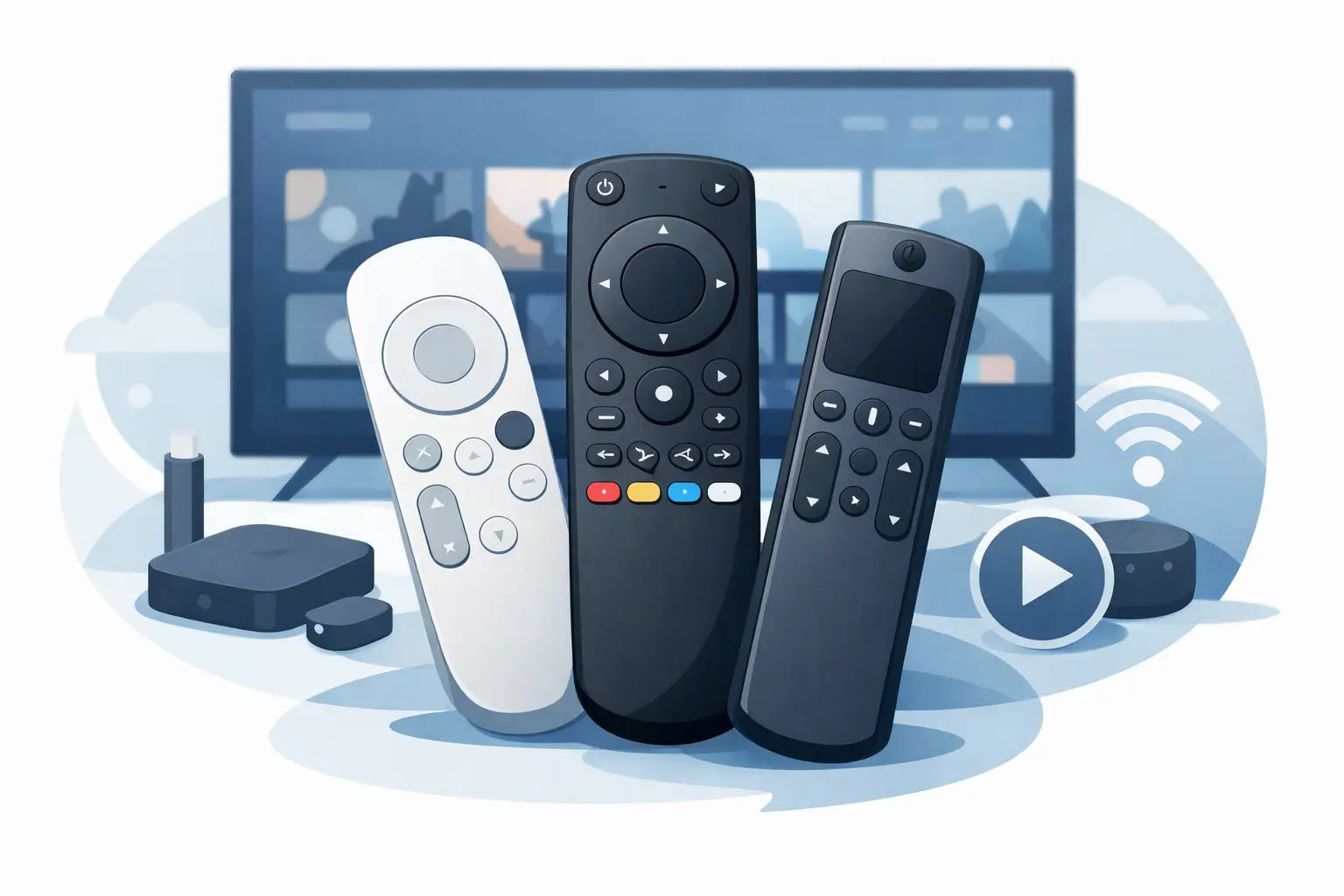
A lost or faulty handset can make a perfectly good television feel useless. That is why TV remote controls are one of the most searched-for replacement parts in the home. When the volume buttons stop responding, the battery cover disappears, or the remote vanishes into the gap behind the sofa for good, most people do not want a new TV. They just want the right replacement, quickly.
The good news is that replacing a remote is usually straightforward once you know what matters. The less helpful news is that many buyers waste time on vague listings, poor-quality universal options or remotes that look right but do not match the model properly. If you want a simple fix, it helps to understand the difference between original, compatible and universal options, and how to check that the remote you order will actually do the job.
Choosing between TV remote controls
Not all replacements are the same, even when they fit the same brand. In most cases, shoppers are deciding between an original remote, a direct compatible replacement, or a universal remote.
An original remote is the closest match to the one supplied with the TV when it was new. It will usually have the same layout, the same button labels and the same functions in the same places. If you are replacing a remote for an older Panasonic, JVC, LG, Philips, Bush, Samsung or Logik television, this is often the easiest option when available.
A compatible replacement is made to work with specific models or ranges of models. This can be the best balance for many households because it keeps things simple and affordable. A good compatible remote should offer the main functions you use every day without awkward setup or missing keys. For most buyers, that is enough. If you mainly want to switch channels, adjust volume, open the menu and access source settings, a proper model-specific compatible remote often works just as well as the original.
Universal remotes have their place, but they are not always the quickest solution. They can be useful when you want one handset for several devices, or when your original model is discontinued. The trade-off is that setup can take longer, some buttons may not map exactly as expected, and certain smart TV functions may be limited depending on the make and code used.
Why model matching matters
The biggest mistake people make is buying by appearance alone. Two remotes can look almost identical and still operate different televisions. A single extra letter in the model number can make the difference between a working replacement and a wasted order.
That is why model matching matters far more than shape or button colour. The best starting point is the television model number, usually found on a label at the back or side of the set. Once you have that, you can look for a remote listed specifically as suitable for that model. This gives you much more confidence than relying on a photo and hoping for the best.
If you still have the original remote, there may also be a remote part number inside the battery compartment or on the rear casing. That can help narrow things down further. But if the original is badly worn or missing, the TV model number is normally the safest route.
This is especially useful for older sets and budget brands where several remotes were produced across similar-looking ranges. It is also important for smart TVs, where platform-specific buttons and menu navigation can vary.
When a universal remote is the right choice
There are times when a universal option makes sense. If the television is older and the original remote is no longer easy to source, a universal replacement may be the quickest way to get the set working again. It can also suit spare-room TVs, caravans, rented properties or households where the main priority is a low-cost fix.
But it depends on how you use the television. If you only need basic control, a universal remote may be perfectly adequate. If you rely on smart features, app shortcuts, guide navigation or brand-specific settings, it can be worth paying a little more for a direct replacement instead.
This is where many buyers get caught out. A listing may say a universal remote is compatible with a brand, but that does not always mean every function will match neatly. The TV may respond, but not in the way you expect. For straightforward viewing that may not matter. For daily family use, it usually does.
Signs it is time to replace your remote
Some remote faults are obvious. Cracked casing, missing buttons, battery leakage and snapped battery springs generally mean replacement is the practical choice. Other faults are less clear.
If certain buttons only work when pressed very hard, the internal contacts may be worn. If the remote works intermittently even with fresh batteries, there may be corrosion or internal damage. If the infrared signal has failed, the television will not respond at all despite the remote appearing normal.
People often spend longer than they need to cleaning an old handset or changing batteries repeatedly when the remote itself is simply finished. Since replacement TV remote controls are usually inexpensive compared with a new television, replacing the handset is often the fastest and most sensible fix.
What to check before ordering
A few quick checks can save time and hassle. First, confirm the TV model number carefully, including any letters and suffixes. Second, decide whether you want an original-style replacement or whether a compatible version will do the job. Third, think about the functions you actually use.
If the television is mainly used by older relatives or anyone who prefers familiar controls, a like-for-like layout is often best. The fewer changes they have to adjust to, the better. If the TV is in a guest room or only used occasionally, a simpler compatible or universal remote may be more than enough.
It is also worth checking whether the remote is ready to use straight out of the packet or whether pairing or programming is required. Many direct replacements are designed for immediate use with batteries fitted, which is ideal when you want the problem sorted without extra steps.
For households trying to keep costs down, this is where specialist spare-parts retailers are useful. Instead of trawling through generic marketplaces and uncertain listings, you can find model-specific options for major brands with clear compatibility information and fast dispatch. That practical approach is exactly why many customers use Spares Direct Oldham when a remote fails unexpectedly.
Why replacing the remote is better than replacing the TV
A non-working remote often makes people assume the television has reached the end of its life, especially if they cannot access menus or change inputs easily from the set itself. In reality, the TV may be absolutely fine.
Replacing the remote is usually cheaper, quicker and far less disruptive than replacing the whole television. It also avoids unnecessary waste. For families, renters, landlords and older households, that matters. If a simple replacement part restores normal use, there is no reason to spend far more on a full new set.
The same thinking applies across the home. Many everyday faults come down to one missing or worn part rather than a failed appliance. A remote control, a freezer drawer front or a washing machine component can all be enough to put something back into service without replacing the item itself.
Getting the right result first time
When you are buying a replacement remote, speed matters, but so does accuracy. The quickest fix is not just fast delivery. It is ordering the right part first time, with confidence that it will suit your TV.
That means looking for clear brand compatibility, checking the full model number and choosing a remote that matches how the set is used in real life. Sometimes a universal option is fine. Sometimes only a direct replacement will feel right. The key is not guessing.
If your current handset has stopped working, gone missing or become unreliable, a replacement is one of the simplest ways to get your television back to normal without overspending. A good remote should not be a gamble. It should be an easy, practical fix that gets the job done and lets the household carry on as usual.