
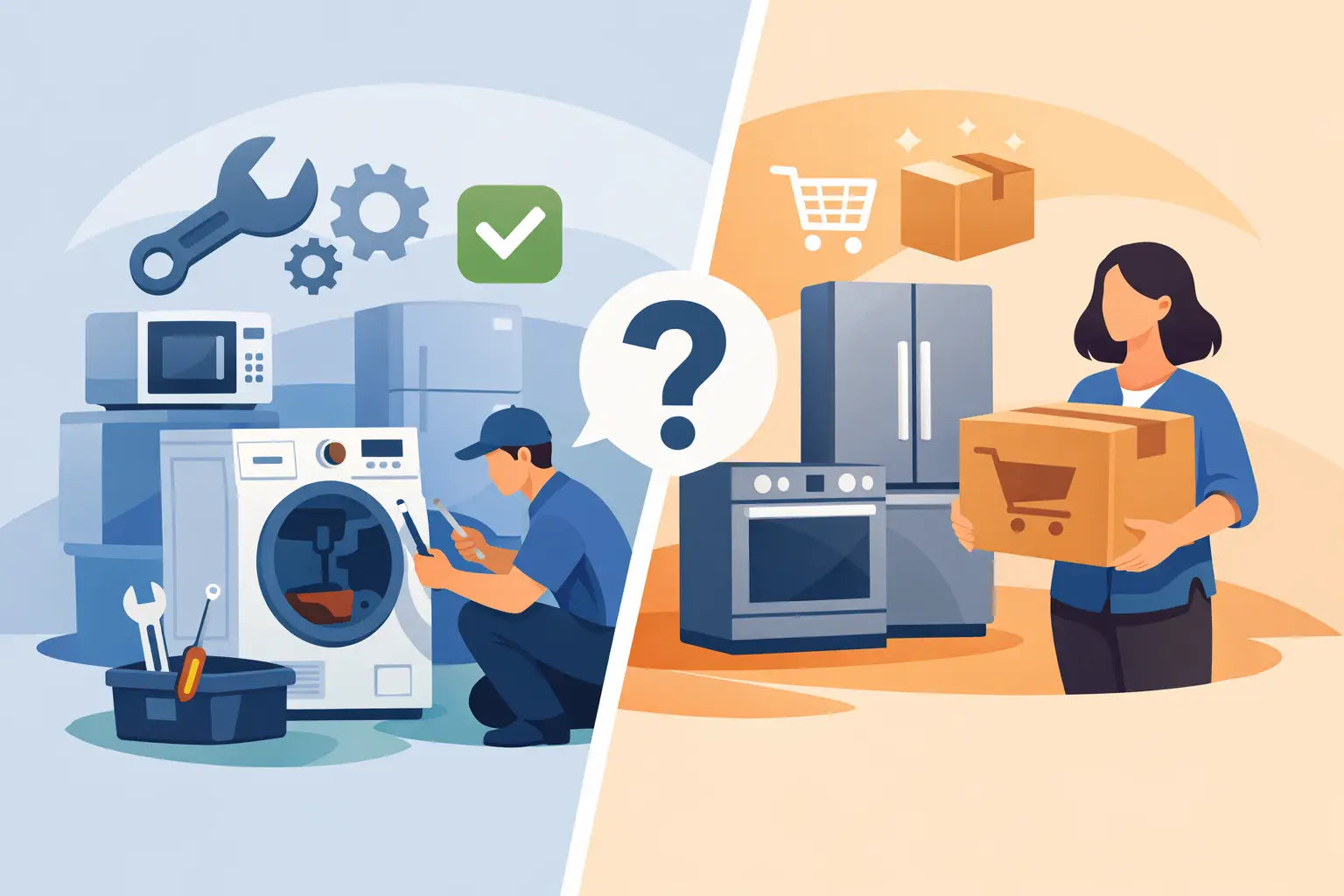
That moment when a washing machine stops draining or the fridge drawer front cracks usually leads to the same question - do you repair an appliance instead of replacing it, or give up and buy a new one? For most households, the answer is not as obvious as retailers make it sound. A single faulty part can make an everyday appliance feel finished, when in reality it may only need a straightforward, low-cost replacement component.
For UK households trying to keep costs under control, repair is often the practical first move. It can be quicker than shopping for a new appliance, arranging delivery and dealing with installation, especially when the fault is limited to one worn, damaged or missing part. The key is knowing when repair makes sense, when replacement is the better option, and how to spot the difference before you spend more than you need to.
Why repair an appliance instead of replacing it?
Replacing a full appliance can be expensive, disruptive and, in many cases, unnecessary. If the motor, cabinet and main systems are still sound, a broken drawer front, door seal, filter, knob or remote control does not usually justify replacing the whole unit.
This is where spare parts make a real difference. Many common household faults come down to one component that has worn through normal use. Fridge shelves crack. Freezer fronts snap. Washing machine handles loosen. TV remotes stop responding after drops, spills or battery corrosion. These are frustrating problems, but they are not always big ones.
Repairing also helps you get more value from what you already own. If you have a reliable Bosch washing machine or a Beko fridge freezer that has worked well for years, it often makes more sense to replace the failed part than gamble on a new budget appliance with unknown long-term durability.
There is also the question of speed. Finding the correct part by brand and model can often get a familiar appliance back in service faster than starting from scratch with a new purchase. For busy households, that matters.
The real test: cost, age and fault type
The best way to decide whether to repair an appliance rather than replace it is to look at three things together: what has failed, how old the appliance is, and what the repair will cost.
If the failed part is external, mechanical or easy to swap, repair is usually worth considering first. Cosmetic and functional components such as freezer drawer fronts, fridge door shelves, replacement remotes and washing machine door parts are often cost-effective to replace. The appliance itself may still have plenty of life left in it.
Age matters, but not in a simple way. An older appliance is not automatically a bad repair candidate. In fact, some older models were built to last and only need occasional replacement parts to keep going. On the other hand, if a machine is already struggling with repeated faults, unusual noises and inconsistent performance, a new part may only delay a bigger breakdown.
Cost is where many people make the quickest decision, but it helps to be specific. A spare part that restores full use for a fraction of the cost of a new appliance is usually a sensible buy. If the repair involves multiple components, specialist labour and no guarantee of solving the issue, replacement may be the safer route.
Faults that are usually worth repairing
Some faults are far more repair-friendly than others. In day-to-day domestic use, the most common worthwhile repairs are the ones that involve wear-and-tear parts rather than major internal failures.
A cracked freezer drawer front is a good example. The freezer still cools properly, but the damaged front makes the drawer difficult to pull out or use. Replacing the front restores normal access without the cost of a new freezer. The same applies to broken fridge shelves, bottle racks and salad drawer covers.
Washing machines often fall into the same category. If the door handle snaps, the detergent drawer is damaged or a filter cap goes missing, the machine itself may be working perfectly. Replacing the faulty part is usually a far better option than replacing the whole appliance.
TV remotes are another clear case. If the television works but the remote has failed, the solution is nearly always a replacement remote control rather than a new TV. For many households, that is the most obvious example of repairing function without replacing the main unit.
In these cases, the repair is practical because the fault is limited, the part is identifiable and the result is immediate.
When replacement is the better call
Repair is not always the right answer, and saying otherwise would waste your time and money. If an appliance has serious electrical faults, repeated breakdowns or clear signs of major internal wear, replacing it may be more cost-effective.
A fridge freezer that no longer holds temperature consistently, a washing machine with recurring motor or drum issues, or an oven with multiple control faults may be reaching the point where further spending is hard to justify. The same applies if spare parts are no longer available for a very old or obscure model.
Safety should come first. If there is a burning smell, exposed wiring, tripping electrics or visible damage to critical components, it is better to stop using the appliance until it has been properly assessed. A cheap part is never a good fix for a dangerous fault.
The sensible approach is to avoid two extremes: replacing too soon when a simple part would do, or spending repeatedly on an appliance that is clearly at the end of its useful life.
How to make the right choice quickly
Most people do not want a long diagnosis. They want to know whether a part will sort the problem and how soon they can get back to normal. That is why model matching matters so much.
Before buying anything, check the appliance brand, full model number and the exact faulty part. This reduces the risk of ordering something close but not compatible. Major brands often produce similar-looking components across multiple models, but small differences in fit can matter.
It also helps to describe the fault plainly. Is the drawer front cracked? Has the remote stopped working entirely? Is the washing machine door handle loose or broken? A clear fault description usually points you towards the right replacement part much faster than assuming the whole appliance is finished.
For practical shoppers, this is often the tipping point. Once you can identify a model-specific spare and see that the cost is reasonable, repair becomes the obvious option.
Why the right spare part matters
A repair only feels worthwhile if the part fits properly and restores the appliance without hassle. That is why compatibility is not a minor detail. A remote needs to work with the correct brand and model. A freezer drawer front needs the right dimensions and fixing points. A washing machine part needs to match the specific machine version, not just the brand name.
This is where a specialist spares retailer is useful. Instead of hunting through vague listings and hoping for the best, you can look for model-specific parts that are designed to get the appliance working again quickly. For households dealing with urgent everyday faults, that saves time as well as money.
Spares Direct Oldham focuses on exactly this kind of practical fix - replacement remotes, appliance components and model-matched parts that help customers restore household equipment without replacing the entire product. For someone who needs the right part fast, that matters more than glossy marketing.
Repairing is often the more practical option
For most common household faults, the real question is not whether a brand-new appliance would solve the problem. Of course it would. The better question is whether replacing the whole thing is necessary.
If the issue is limited to one broken, worn or missing component, repair is often the more sensible choice. It keeps a familiar appliance in use, avoids unnecessary expense and gets the job done with far less disruption. Not every appliance is worth saving, but plenty are.
Before writing one off, check the model number, identify the fault and see whether the right spare part is available. You may find that the quickest fix is also the cheapest one.