
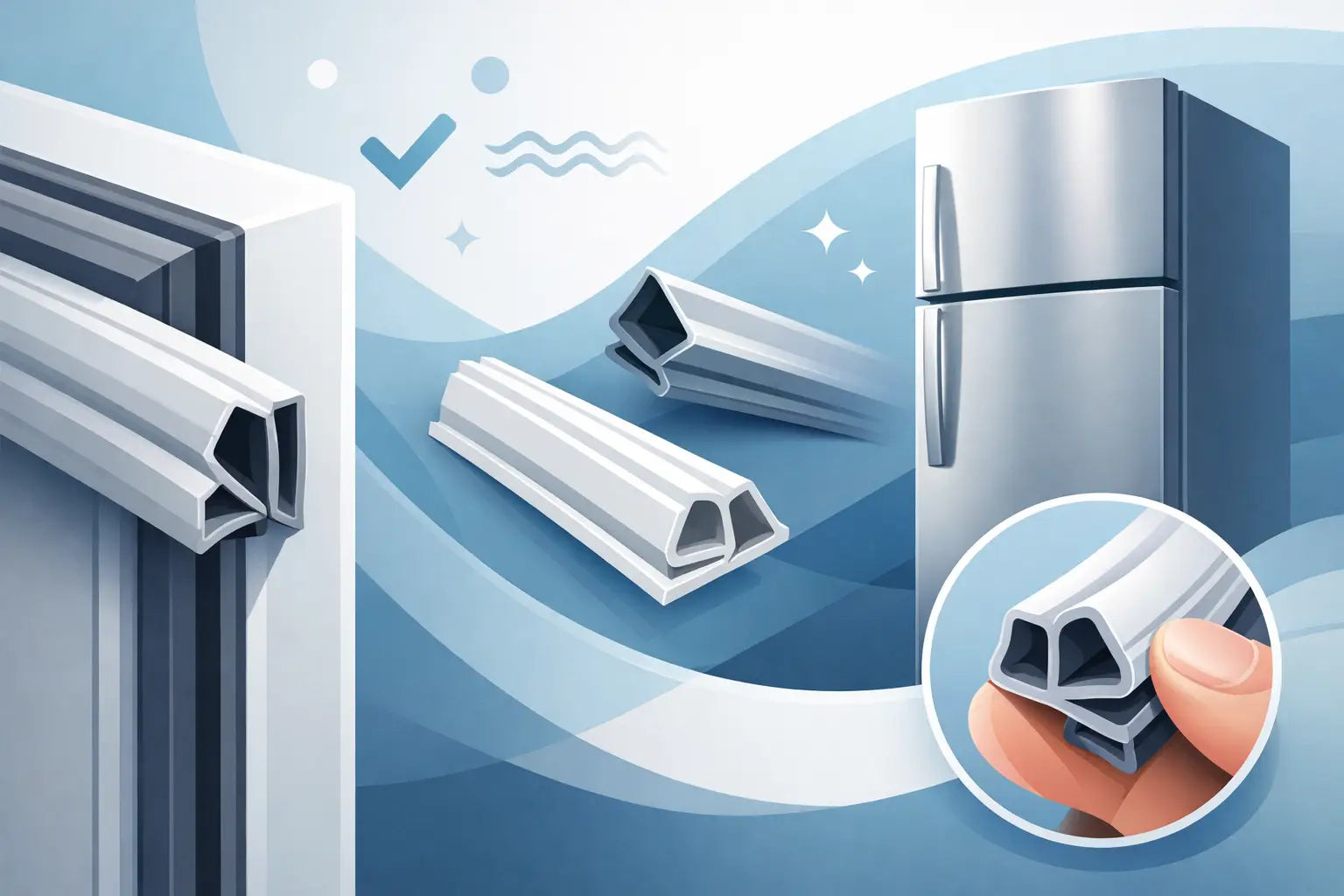
A fridge that feels cold inside but runs more often than usual may not need replacing. The problem is often a worn, split or misshapen door gasket. Finding the best fridge door seals is less about choosing the thickest rubber and more about getting a secure, model-compatible fit that keeps chilled air where it belongs.
A replacement seal is a relatively straightforward repair, but only when the dimensions, fixing method and door shape are correct. Before ordering, take a few minutes to identify the appliance properly. That small check can save the inconvenience of receiving a seal that looks right in the photograph but does not sit correctly around your fridge door.
When does a fridge door seal need replacing?
The door seal, also called a gasket, creates an airtight barrier between the fridge door and cabinet. Over time, it can flatten, harden, tear or pull away at the corners. Grease, food residue and repeated opening can also stop it sealing as it should.
A common sign is condensation around the door frame or inside the fridge. You may also notice food spoiling sooner than expected, ice building up in a fridge freezer, or the motor cutting in more frequently. In some cases, the door appears closed but opens with very little resistance because the magnetic strip inside the gasket is no longer pulling firmly against the cabinet.
Try the paper test before assuming the seal has failed. Close the door on a strip of ordinary paper, then pull it gently. If the paper slides out easily at several points around the edge, the gasket may not be making full contact. Test the top, bottom and both sides, paying particular attention to the corners.
A dirty seal can give the same result. Clean the gasket and the cabinet edge with warm water and a mild washing-up liquid, then dry both surfaces thoroughly. If the seal remains loose, cracked or flattened after cleaning, replacement is usually the sensible option.
How to choose the best fridge door seals
There is no single best seal for every fridge. The correct choice depends on the brand, model number, door position and the way the original gasket attaches. A refrigerator and freezer compartment can use different seals even when they are on the same appliance, so avoid ordering based on the appliance brand alone.
Start with the model number
The model number is the most reliable way to match a replacement. It is commonly found on a rating plate inside the fridge compartment, behind a salad drawer, on the side wall, around the door opening or at the rear of the appliance. Write down the complete code, including letters, numbers and any suffixes.
This matters because two models with almost identical names may use different door sizes or mounting channels. Model-specific fridge seals are designed for the door profile they were made for, giving you the best chance of a clean fit and a proper magnetic closure.
If the rating plate is worn or missing, measure the old gasket carefully. Measure the outer width and height from corner to corner while the seal is laid flat, and note the shape of the corners. Measurements are useful for checking a match, but they should not replace model-number matching where that information is available.
Check how the existing gasket is fitted
Fridge door seals are attached in several ways. Some push into a groove around the inner door liner. Others are held behind a retaining strip or fixed with screws. Certain older appliances use gasket designs that are specific to the door construction.
Look at a small section of the old seal before removing it. If you can see a narrow lip pushed into a channel, you need a push-in type. If screws are visible beneath the gasket edge, choose a screw-fixed replacement designed for that arrangement. Forcing the wrong style into place can damage the liner or leave gaps that defeat the point of the repair.
Choose a quality, compatible replacement
A genuine manufacturer part is made to the original specification, while a compatible replacement can be a cost-effective option when it is clearly listed for your appliance model. Either can be a good choice when compatibility is confirmed.
The key is to avoid generic seals unless they are specifically intended for your door design and you are confident measuring, cutting and joining them. Universal gasket kits can suit some older or unusual appliances, but they take more fitting care and leave more room for error. For most household fridges and fridge freezers, a ready-made model-specific seal is quicker to fit and more reassuring.
For major brands such as Beko, Bosch, Hotpoint, Indesit, Samsung and Zanussi, check both the full model code and whether you need a fridge door gasket, freezer door gasket or a seal for a particular compartment. Spares Direct Oldham helps households source practical, brand-compatible appliance parts when a small fault should not mean replacing the whole appliance.
What makes a door seal work properly?
The best replacement gasket should sit flat against the door liner, follow each corner without bunching and make even contact all the way around the cabinet. The magnetic section must align with the metal edge of the fridge body. A seal that is slightly twisted or folded from packaging may look wrong at first, but it can often be reshaped before fitting.
Leave the new gasket at room temperature for a short time before installation. If it has deep creases, gently warming it with warm air from a hairdryer on a low setting can help it relax. Keep the heat moving and do not overheat the rubber, as excessive heat can cause damage or distortion.
The door itself also needs to be level. If a new seal leaves a gap at the top or bottom, check whether the appliance is leaning forward or whether the hinges are worn, loose or misaligned. A replacement gasket cannot compensate for a sagging door. Adjusting the feet or hinges may be needed before judging whether the seal is faulty.
Fitting a replacement fridge door gasket
Switch the appliance off before starting if access around the door is awkward, and remove food from door shelves if the door will be open for a while. You do not normally need to remove the whole door for a simple gasket replacement, though it can make some screw-fixed designs easier to handle.
For a push-in gasket, pull the old seal away steadily from one corner rather than yanking it sharply. Clean out the retaining channel, removing crumbs and residue that could stop the new gasket sitting fully home. Start fitting the replacement at the corners, then press the mounting lip into the channel along each side. Work gradually and check that the seal has not stretched as you go.
For a screw-fixed type, loosen the screws enough to release the old gasket edge. Do not remove every screw unless the design requires it. Position the new seal under the retaining strip, tighten the screws evenly and avoid overtightening, which can crack plastic door liners.
Once fitted, close the door and inspect the gap. The gasket should touch consistently without needing to slam the door. Repeat the paper test around the perimeter after a few hours, allowing the new seal time to settle into its working shape.
Mistakes that lead to a poor fit
Ordering by photograph alone is the most common problem. A black magnetic gasket can look identical to another but differ by only a few millimetres, and that is enough to affect the seal. Choosing a freezer gasket for the refrigerator door, or vice versa, is another easy mistake on fridge freezer combinations.
Do not cut a model-specific gasket to make it fit. If it is too large, too small or the corners do not follow the door, it is likely the wrong part. Also avoid using glue as a first fix for a gasket that has become hard, torn or lost its magnetic grip. Adhesive may temporarily hold a loose edge, but it will not restore the sealing surface or magnetic pull.
A small part that can protect your food budget
A properly sealing fridge door helps the appliance maintain a stable temperature without working harder than necessary. It can reduce moisture, limit frost and help keep chilled food at the condition you expect. More importantly, it is a practical repair that can extend the useful life of an appliance already serving your household well.
Check the full model number, confirm the fixing style and take a careful look at the old gasket before placing an order. With the right replacement seal, this is one of those everyday repairs that can make a noticeable difference from the first properly closed door.