
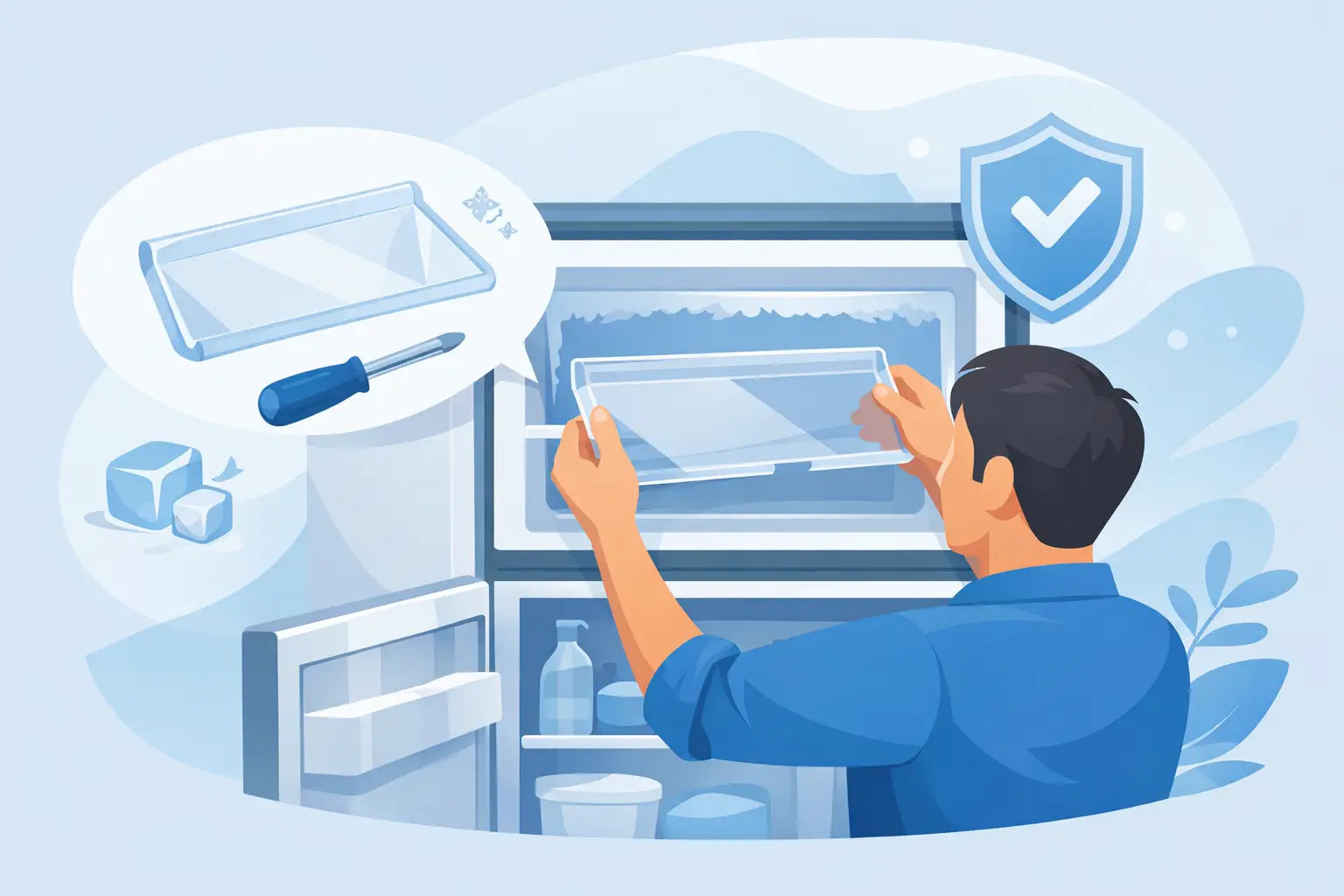
A cracked flap on the dairy shelf or a loose freezer compartment door can make an otherwise reliable fridge feel worn out. The good news is that learning how to replace a Beko fridge flap is usually a straightforward repair. In many cases, the flap is designed to clip, slide or pivot into place, so there is no need to replace the whole shelf or call out an engineer.
The part must match your appliance, though. Beko has produced many fridge and fridge-freezer models with similar-looking but differently sized doors, hinge points and fittings. Taking a few minutes to identify the flap correctly before ordering can save the frustration of receiving a part that almost fits.
First, identify which Beko fridge flap is damaged
The word “flap” can describe several parts inside a Beko appliance. It may be the small clear door over the dairy compartment, a drop-down freezer flap, a door on a chiller compartment, or a cover fitted to a shelf or drawer. These parts are not interchangeable simply because they look alike in a photograph.
Start by checking where the broken piece sits. A dairy compartment flap is normally found at the top of the fridge door and often has two small pivot pins, one on each side. A freezer flap is usually wider, may be more solidly moulded, and can have side hinges or clip-in lugs. If the entire shelf support has snapped as well as the flap, you may need more than one replacement component.
The most reliable way to find the correct spare is the appliance model number. On Beko fridges and fridge-freezers, the rating plate is commonly located inside the fridge compartment, often on a side wall behind a salad drawer, near the bottom, or around the door opening. It may also be behind a lower cover on some models. Record the full model reference exactly as shown, including letters and numbers.
Do not rely only on the model name printed on the front of the appliance. Small variations in a model range can use different shelf assemblies and flap designs. Comparing the shape, dimensions and fitting points of the existing part against the replacement description gives you an extra level of confidence.
Before you replace a Beko fridge flap
Most fridge flaps can be changed while the appliance remains switched on, but it depends on where the part is fitted. For a flap on the fridge door, the job is normally quick and does not affect the cooling system. If you are replacing a freezer flap, it is sensible to work with the compartment empty and dry, particularly if ice has built up around the hinges.
Remove food, jars and bottles from the shelf or compartment beneath the flap. This gives you room to work and prevents items falling when the shelf is moved. A soft towel on the floor or worktop is useful if the old plastic is brittle and breaks during removal.
Before starting, check four things:
- the replacement flap has the same width, hinge arrangement and handle position as the original;
- the shelf, rack or compartment that holds it is not cracked or bent;
- no broken pieces of plastic are lodged in the hinge sockets or clips; and
- the new flap is at room temperature, rather than very cold from storage, so the plastic is less likely to feel rigid.
Check whether the flap has pins, clips or sliding runners
Look closely at the ends and underside of the old flap before forcing anything. A pivoting door often uses two moulded pins. One pin may be fixed while the other has a flexible section that allows it to pop free. Clip-in flaps usually have tabs that release when the flap is lifted or gently squeezed. Sliding covers run in channels and need to be moved fully to one side before lifting out.
Taking a clear photo before removal can be useful, especially if the hinge arrangement is not obvious. It gives you a quick reference when fitting the new part.
How to replace a Beko fridge flap step by step
Begin by opening the flap fully. If it is a dairy compartment flap on the fridge door, hold it close to each hinge rather than pulling from the centre of the handle. This reduces strain on the remaining plastic.
For a flap with pivot pins, gently flex the side of the flap containing the springy or movable pin. Ease that pin out of its socket first, then lift the opposite fixed pin clear. Do not twist the flap sharply. Older plastic can become brittle, and a broken hinge socket in the door shelf is a more involved repair than replacing the flap itself.
If the flap is held by clips, locate the tabs and press or lift them as required. A small screwdriver may help to release a tight tab, but place it between the clip and the socket with a light touch. Once the first side is free, support the flap as you release the other side.
For a sliding flap or cover, slide it towards the wider opening in the runner. It should then lift or angle out of the channel. If it will not move freely, stop and check for ice, food debris or a damaged runner. Forcing a sliding cover can crack the shelf moulding.
With the old flap removed, wipe the hinge sockets, runners or clips with a clean dry cloth. This is a good opportunity to clear crumbs and sticky residue that could prevent the new part sitting correctly. Avoid using very hot water on cold plastic components, as sudden temperature changes can cause distortion.
Fit the replacement in the reverse order. With pivot-pin flaps, insert the fixed pin first, then gently flex the other side until the second pin clicks into place. The flap should move freely without excessive side-to-side play. With clips, line up both tabs carefully and press until they engage. With runners, insert the correct edge into the channel and slide the flap through its full travel.
Close and open it several times before putting food back. It should sit level, shut properly and stay supported at both sides. A dairy flap may not form an airtight seal, so do not judge it by the resistance you would expect from the main fridge door. The important check is that it opens smoothly and does not drop away from its hinges.
If the new flap will not fit
A replacement that will not clip in is often a matching issue, not a fitting issue. Check the model number again and compare the hinge pins, overall width and location of the handle. A difference of only a few millimetres can prevent a flap from seating properly.
Also inspect the part that the flap attaches to. If a hinge socket on the door shelf has snapped, fitting a new flap alone will not solve the problem. The shelf, rack or compartment front may need replacing too. This is particularly common where a loaded door shelf has been pulled open repeatedly by the flap.
If the flap fits but feels stiff, check that it is not catching on a shelf, bottle or food container. On freezer models, frost can also interfere with movement. Defrosting and drying the area may be enough to restore normal operation. Do not cut, sand or reshape a replacement part to make it fit. It can weaken the plastic and may stop the flap working as intended.
When a repair is worth doing
Replacing a Beko fridge flap makes sense when the fridge is cooling correctly and the damage is limited to a door, cover, hinge pin or shelf fitting. It is a small repair that can restore useful storage, protect dairy items from being knocked over and make the appliance easier to use every day.
If you find several cracked shelves, damaged door racks and persistent temperature problems, assess the appliance as a whole. A flap repair will improve access and storage, but it will not resolve a cooling fault, failed seal or worn compressor.
Keep the replacement flap in good condition
Most flap damage happens through force rather than normal use. Avoid overfilling the compartment behind it, particularly with tall tubs or jars that push against the door when it closes. Open the flap using the handle or central grip, rather than pulling hard on one corner.
Clean it with warm water and mild washing-up liquid, then dry it before refitting. Abrasive cleaners and very hot water can mark or weaken clear plastic. If the flap becomes stiff after a freezer defrost, make sure the hinge area is completely dry before operating it.
A correctly matched spare can give a Beko fridge years more practical service for a modest cost. Keep the full model number somewhere safe once you have found it - it makes future replacements for shelves, drawer fronts and other everyday fridge parts far quicker to identify. For households needing a compatible part without replacing the appliance, Spares Direct Oldham can help make that small repair a simple one.