
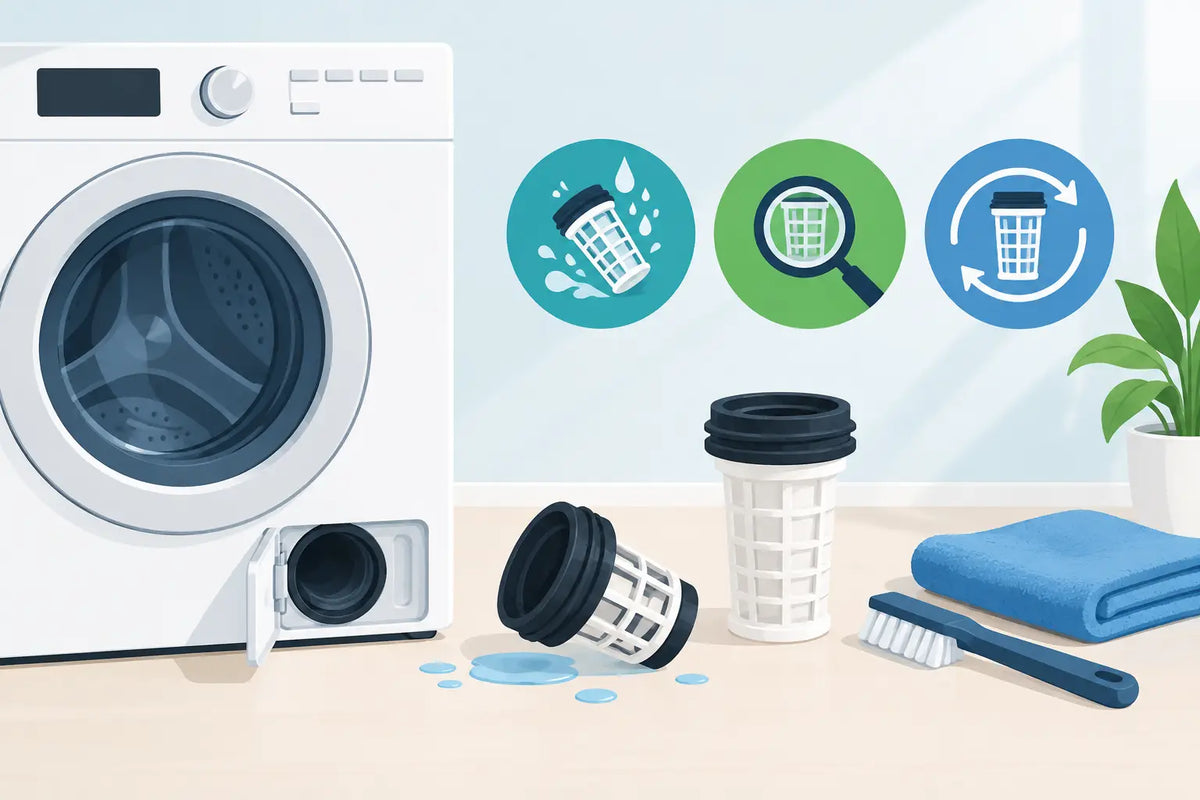
A washer that stops mid-cycle with water still in the drum is rarely a problem you can ignore. In many cases, washing machine filters are the first place to check. A blocked filter can prevent proper drainage, leave clothes wetter than usual and put extra strain on the pump. The good news is that cleaning or replacing the right filter is often a straightforward, affordable repair.
What Washing Machine Filters Actually Do
Most front-loading washing machines have a drain pump filter, sometimes called a debris filter or coin trap. Its job is to catch items that should not reach the drain pump, including loose buttons, hair grips, coins, tissue, lint and small pieces of fabric. Without it, debris can jam or damage the pump and lead to a more expensive fault.
The filter is usually positioned behind a small flap at the lower front of the appliance. On some models it is easy to reach, while others have a plinth panel or cover that needs to be removed first. The exact position varies by make and model, so checking the instruction manual is always worthwhile before forcing a panel or turning a component the wrong way.
There is another type of filter that can cause trouble: the small mesh filters in the water inlet hose connections. These stop grit and sediment from entering the machine with the water supply. They are less commonly cleaned than pump filters, but can contribute to slow filling or water inlet faults when blocked.
Signs Your Filter May Need Attention
A blocked drain filter does not always cause a complete breakdown straight away. It often starts with small changes in how the machine performs. Your washing may come out very wet, the spin cycle may be slow or interrupted, or the machine may make an unusual humming noise as it tries to pump water away.
You may also notice water remaining in the drum after the programme has finished, a bad smell around the lower part of the machine, or an error code on the display. Error codes differ between brands, so they should be checked against the appliance manual. A drainage warning does not automatically mean the filter is at fault, but it is a sensible first check before arranging a larger repair.
If water is leaking from the front lower panel, do not assume the filter itself has failed. The cap may be loose, its seal may be worn, or debris could be preventing it from closing properly. A cracked filter housing or damaged pump could also be responsible. This is where a close inspection matters.
How to Clean a Washing Machine Filter Safely
Cleaning a drain pump filter can be messy, particularly if the drum is full of water. Take a few minutes to prepare rather than opening the filter cap and hoping for the best.
First, switch the washing machine off at the mains and unplug it. Never work around water and appliance parts while the machine is connected to the electricity supply. Turn off the water supply too if you will also be checking the inlet hose filters.
Place old towels or a shallow tray in front of the filter access panel. Many machines have a small emergency drain hose beside the filter cap. If yours does, remove its stopper carefully and drain the water in stages into a low container. This keeps the spill manageable. If there is no drain hose, loosen the filter cap slowly, allowing water to run out a little at a time.
Once the water has drained, unscrew and remove the filter. Pull away any trapped debris, then rinse the filter under warm running water. Do not use sharp tools that could damage the plastic or the sealing edge. Wipe the filter cavity with a cloth and look inside for anything lodged behind the filter, such as a coin or hair grip.
It is also useful to check the small pump impeller inside the housing. It may move with a slight resistance, but it should not be completely jammed. Do not force it. If the impeller is broken, loose or unable to turn because of a deeper obstruction, the pump may require further attention.
Refit the filter carefully, making sure it is fully seated and tightened by hand. Reconnect any emergency drain hose, close the access flap and run a short rinse or drain programme while watching for leaks. If the machine still will not drain, switch it off again rather than repeatedly restarting it.
How Often Should You Clean It?
For a typical household, checking the drain filter every two to three months is a practical routine. Families with children, pet owners, or anyone washing heavily soiled workwear may need to inspect it more often. Small items left in pockets are the most common cause of sudden blockages, so checking trousers, school uniforms and jackets before washing remains the simplest prevention.
Inlet mesh filters usually need less frequent attention. Consider checking them if the machine is taking much longer to fill, shows a water supply error, or you live in an area where sediment in the water supply is a recurring issue.
When Cleaning Is Not Enough
A filter can look clean but still fail to seal or fit correctly. Plastic threads can wear, the handle can crack and the rubber seal may flatten over time. If the cap is damaged, replacing the filter is usually a better option than trying to repair it with tape, sealant or excessive force.
Choose a replacement by matching the appliance brand and full model number, not by appearance alone. Similar-looking washing machine filters can have different thread sizes, seals and handle designs. The model number is commonly found around the door opening, on the rear panel or on the appliance rating plate. Taking a clear note of the complete code makes finding a compatible spare far easier.
A replacement filter may solve a leak from a damaged cap or a filter that will not tighten. It will not solve every drainage issue, however. A blocked drain hose, kinked outlet pipe, failed pump, faulty pressure system or electrical fault can produce similar symptoms. If the filter is clear and correctly fitted but the machine still leaves water in the drum, the issue needs further diagnosis.
Checking the Water Inlet Filters
If your washing machine is not filling properly, the inlet filters are worth inspecting. These are small mesh screens located where the cold and, on some older machines, hot water hoses connect to the appliance. They can collect limescale or sediment over time.
With the appliance unplugged and the water supply turned off, carefully disconnect the hose from the back of the machine. The mesh filter may be visible just inside the inlet valve. Remove it only if the design allows this without force, rinse it gently and refit it securely. Check the hose washer before reconnecting, then turn the water on slowly and inspect for drips.
Avoid removing filters permanently to improve water flow. They protect the inlet valve, and running without them can allow debris into a part that is more difficult and costly to replace.
Avoiding Repeat Blockages
Good washing habits reduce how often you need to deal with drainage faults. Empty pockets, fasten loose items where possible and use a wash bag for small garments such as baby socks or delicate underwear. Use the recommended amount of detergent too. Excess detergent can leave residue that combines with lint and contributes to unpleasant smells around the filter area.
A regular maintenance wash can help keep the drum and internal pipework cleaner, but it does not replace checking the filter. If your machine has started showing drainage symptoms, cleaning the filter directly is more useful than relying on a hot cycle alone.
When a filter is worn, cracked or missing, fitting the correct replacement promptly protects the pump and helps keep the appliance working as it should. Spares Direct Oldham supplies practical replacement parts for everyday appliance repairs, helping households get the right component without replacing a whole machine unnecessarily.
A few towels on the floor and ten careful minutes can be enough to prevent a small blockage becoming a disrupted laundry day.