
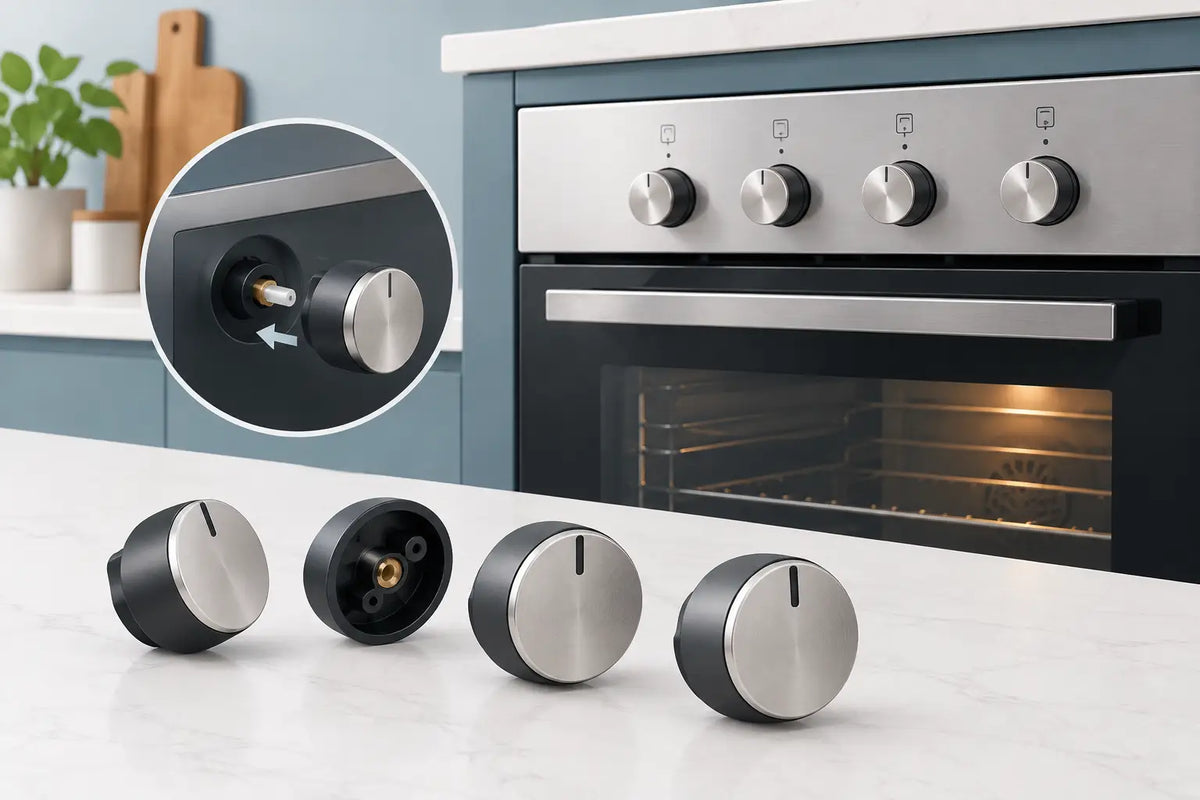
A loose, cracked or missing oven knob can make a perfectly usable cooker feel unreliable. Bosch oven knobs are small parts, but they control the settings you depend on for everyday meals, from selecting the oven function to adjusting temperature or setting the timer. Replacing the right knob is usually a quick, affordable repair - provided it is matched to the exact appliance.
A replacement that looks similar is not always the right replacement. The shaft fitting, shape, marking layout, finish and position on the control panel can vary between Bosch cooker models. Taking a few minutes to identify your oven properly helps avoid the inconvenience of ordering a knob that does not sit securely or does not match the controls beside it.
When should you replace an oven knob?
Oven control knobs are handled frequently and can wear over time. Heat from the appliance, grease from cooking and regular cleaning can leave plastic brittle, markings faded or fittings loose. A knob may also crack after being knocked, particularly on a cooker in a busy family kitchen.
The most obvious sign is a missing knob, but replacement is worth considering when the knob spins without changing the setting, slips off the spindle, has a damaged centre fitting or no longer shows the temperature and programme symbols clearly. Worn markings are more than a cosmetic issue. If you cannot tell whether the grill, fan oven or conventional oven function has been selected, cooking becomes guesswork.
It is also common to replace one damaged knob after the rest have become discoloured or worn. Whether replacing a single control or refreshing a matching set, model-specific parts give the neatest result and help keep the cooker straightforward to use.
How to match Bosch oven knobs to your model
The best starting point is the oven model number, often shown as the E-Nr on Bosch appliances. This identifies the specific version of the cooker or built-in oven and is more reliable than choosing based on a photograph alone. The E-Nr is normally printed on the appliance rating plate, which may be found around the oven door frame, behind the door, on the side of the appliance or in another accessible position depending on the model.
The FD number may also appear on the same label. While the E-Nr is usually the key reference for finding compatible spares, recording both numbers can help distinguish between similar versions. Copy the details exactly, including any letters, numbers and suffixes.
Before ordering, check four practical details: the full E-Nr, which control knob is needed, the shape of the knob fitting and the symbols or temperature scale on its face. Function-selector knobs, temperature knobs and timer knobs can look alike at first glance but may not be interchangeable. A function knob may carry cooking symbols, while a temperature control is normally marked with degrees or a temperature range.
Photographs remain useful as a secondary check. Compare the knob profile, colour, indicator line and printed symbols with the existing controls. A black knob with a silver trim, for example, may fit differently from an all-silver version used on a closely related cooker. Matching by model number first and appearance second gives the strongest chance of a correct fit.
Why a universal knob is not always the easy option
Universal oven knobs can be useful in limited situations, especially where an original-style part is no longer available. However, they involve compromises. An adaptor may sit too high on the spindle, feel less secure, obscure panel markings or look out of place beside the remaining controls.
A poorly fitting knob can also make it difficult to judge the selected setting accurately. If the appliance has a model-specific replacement available, that is generally the more dependable choice. It is designed around the relevant spindle size and control-panel layout rather than being made to fit a range of appliances approximately.
Check whether the fault is the knob or the control
Not every control problem is caused by the knob itself. Remove the knob carefully by pulling it straight towards you, without forcing it sideways. With the knob off, inspect the centre opening for cracks, rounding or damaged internal ridges. Then look at the control shaft behind it.
If the shaft is intact and the oven setting can be changed with gentle movement of the shaft, the knob is likely to the problem. A replacement Bosch knob may be all that is needed. If the shaft is bent, loose, difficult to turn or does not alter the oven setting, the issue may be with the switch, thermostat, selector or timer behind the fascia.
Do not force a tight control or attempt to dismantle electrical parts while the cooker is connected to the mains. Isolate the appliance before inspecting removable controls. Where a fault appears to be inside the cooker, a qualified appliance engineer is the safer route, particularly for built-in ovens and any appliance with electrical or heat-related damage.
Fitting a replacement knob correctly
For most Bosch ovens, fitting a replacement control knob is straightforward. Once the appliance is switched off and cool, line up the fitting on the rear of the knob with the shaft. Push it on firmly and evenly until it sits in the same position as the other knobs. It should feel secure without needing excessive pressure.
Check the pointer or indicator line before using the appliance. With the control in the off position, the mark should align with the correct off symbol on the fascia. Turn the knob gently through its settings to make sure it moves smoothly and points accurately at each selection.
If the knob will not go on easily, stop rather than forcing it. Recheck the model number and compare the rear fitting with the original part. Pushing the wrong fitting onto a control shaft can damage both the knob and the underlying component, turning a simple repair into a larger job.
Keeping cooker controls in good condition
A little care can make replacement knobs last longer. Clean them with a soft damp cloth and mild washing-up liquid rather than soaking them or using abrasive cleaners. Strong chemicals and scouring pads can remove printed symbols and dull the finish, particularly on knobs with metallic-effect trims.
Avoid spraying cleaner directly onto the control panel. Liquid can travel behind the fascia and affect switches or electronics. Instead, apply cleaner to the cloth first and wipe around the controls carefully. If food or grease has built up around the base of a knob, remove it only when the appliance is cool and clean the area gently before refitting.
For households where several people use the cooker, clear controls also reduce mistakes. It is much easier to set the correct programme when the symbols remain visible and the knob pointer is properly aligned. That matters when cooking for children, managing a busy evening meal or simply wanting the oven to work without fuss.
A small replacement that restores everyday use
Replacing a damaged oven control does not need to mean replacing the cooker. The right Bosch oven knob can restore a familiar appliance quickly, improve the appearance of the control panel and make settings easier to read again. At Spares Direct Oldham, matching the part to the appliance model is the sensible first step for a repair that feels right from the first turn.
Keep the E-Nr recorded somewhere accessible once you have found it. The next time a shelf support, door seal, lamp cover or another cooker part needs attention, you will already have the key detail needed to choose with confidence.