
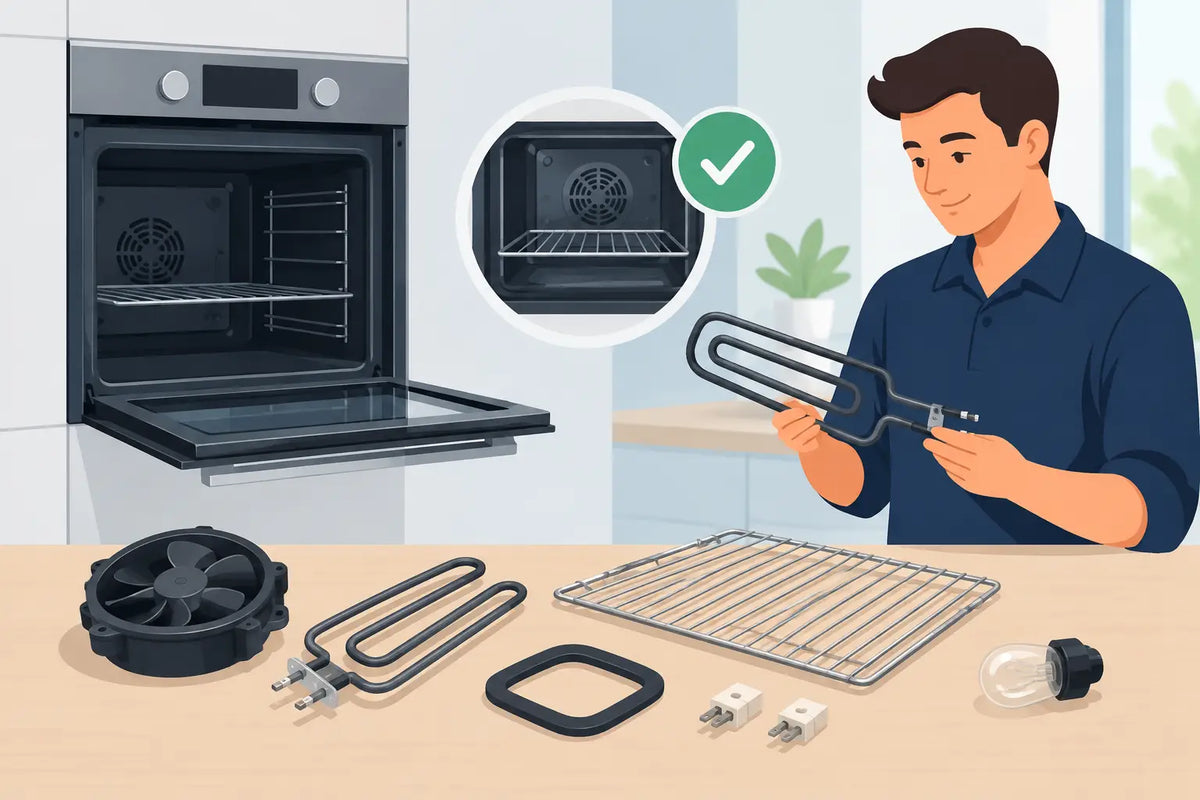
A cooker that will not heat, a door that no longer closes properly or a missing control knob can disrupt every meal in the house. The good news is that many common faults can be resolved with the right oven spares, without the cost and inconvenience of replacing the whole appliance. The key is identifying the exact part your cooker needs before ordering.
Whether you have a built-in electric oven, a freestanding cooker or a double oven, the model number is your best starting point. It helps match a replacement part to the correct fitting, size and electrical specification, giving you far more confidence that the repair will get your kitchen back to normal quickly.
Which Oven Spares Are Most Commonly Replaced?
Some oven parts work hard every day and naturally wear over time. Others can be damaged by heat, heavy use or an accidental knock when cleaning. Knowing what each part does can help you narrow down the fault.
Heating elements are among the most frequently replaced parts in electric ovens. A fan oven element sits around the fan at the back of the cavity and circulates heat evenly. If the fan runs but the oven remains cold, takes much longer than usual to heat up or trips the electrics, the element may be at fault. A grill element performs a different job at the top of the oven and may fail when the grill no longer heats or only heats on one side.
Oven door seals are another common replacement. A worn, split or flattened seal allows heat to escape around the door. You may notice longer cooking times, excess heat at the front of the appliance or uneven results. Replacing a damaged seal is often a straightforward way to help the oven retain heat properly again.
Control knobs can crack, become loose or go missing. Although they are small parts, the correct knob matters. The shaft fitting, shape and position markings need to match your appliance so you can select settings safely and accurately.
Shelves, shelf runners, grill pans and oven trays also take regular punishment. Bent shelves can be unstable under heavy dishes, while broken runners make it awkward to slide trays in and out. Replacing these practical components can make an older cooker safer and easier to use.
Other parts may include thermostats, temperature sensors, bulbs, lamp covers, door hinges, door handles and replacement glass. These parts are model-specific more often than shoppers expect, so checking the appliance details is essential.
How to Find the Correct Oven Spares
The part that looks right is not always the part that fits. Two ovens from the same manufacturer can use different elements, seals or hinges, even when their designs appear very similar. For this reason, start with the full model number rather than relying on a photograph alone.
On many built-in ovens, the rating plate can be found around the door frame, behind the lower drawer, on the side of the cavity or inside the door area. On freestanding cookers, check the frame around the oven door, the rear panel or a side panel. The label may show a model number, product code, service number or serial number. Record all the details shown if possible.
Once you have identified the model, compare the original part carefully with the replacement description. For heating elements, check the wattage, shape, mounting points and terminal arrangement. For door seals, check the fixing style and the overall dimensions. For knobs, look at the shaft type and whether the pointer position is correct.
If a part has been removed, its own reference number can also be useful. Manufacturers often stamp codes onto elements, hinges and other components. This can support a model-number match, but it should not replace it where a specific appliance fitment is available.
Check the Fault Before You Order
A replacement part can save money, but only if it addresses the real issue. A little fault-finding beforehand can prevent unnecessary orders and delays.
If your oven is not heating, consider whether the display and controls are working, whether the clock has been set after a power cut and whether the correct cooking function has been selected. A fan running without heat often points towards an element fault, while no power at all may suggest a supply, fuse or control issue.
For uneven cooking, inspect the door seal for gaps and damage. Also check whether the oven door is sitting squarely on its hinges. If the door drops when opened or will not close flush, worn hinges may be contributing to heat loss.
If the oven light has stopped working, allow the appliance to cool fully before checking the bulb and lamp cover. Oven bulbs are designed to withstand higher temperatures than standard household bulbs, so fitting the correct type is worthwhile.
Burn marks, a visible break in an element or a part that has physically snapped are stronger signs that replacement is needed. However, not every failed component shows obvious damage. When there is uncertainty, a qualified appliance engineer can diagnose electrical faults safely.
When a DIY Repair Makes Sense
Simple, non-electrical parts such as shelves, trays, knobs and some door seals are often suitable for a careful home repair. They can restore day-to-day use at a sensible cost, especially when the rest of the cooker is in good working order.
Electrical repairs require more caution. Always isolate the appliance from the mains supply before inspecting or removing any component. Never rely solely on the oven controls being switched off. If you are not confident working around wiring, terminals or built-in appliance connections, arrange for a qualified engineer to fit the part.
Gas cooker repairs should also be handled with particular care. Anything involving the gas supply, ignition system or burner assembly may need professional attention. A quick repair is only worthwhile when it is safe as well as correct.
The age and overall condition of the appliance matter too. Replacing a door seal or heating element on a cooker that otherwise performs well can be excellent value. If there are repeated faults, damaged wiring, a failing control board and worn hinges all at once, it may be sensible to obtain advice before investing in several parts.
Get More Life From Your Oven Parts
A few habits can help replacement parts last longer. Avoid slamming the oven door, as repeated impact can strain hinges, handles and glass. Clean food spills once the oven is cool, particularly around the door seal, as baked-on residue can prevent a proper seal and shorten its life.
Do not overload shelves or place heavy dishes on a partially extended shelf runner. Use cookware that fits comfortably inside the cavity, leaving space for air to circulate around it. This is particularly helpful in fan ovens, where unobstructed airflow supports more even cooking.
When cleaning, avoid harsh scraping around the heating element, sensor and internal lamp. If you remove shelves or runners for a deeper clean, take a quick photograph first so you can refit them in the correct position.
A Better Repair Starts With the Model Number
Ordering oven parts should not feel like guesswork. A clear model-number match, a careful check of the faulty component and an honest view of whether the repair is within your skills will usually lead to the right result. Spares Direct Oldham helps households source practical replacement parts for everyday appliances, including hard-working cooker components that can extend the life of a trusted oven.
Before placing an order, take one extra minute to check the rating plate and compare the fitting details. That small step can mean the difference between a part that merely looks familiar and one that gets dinner back on schedule.