
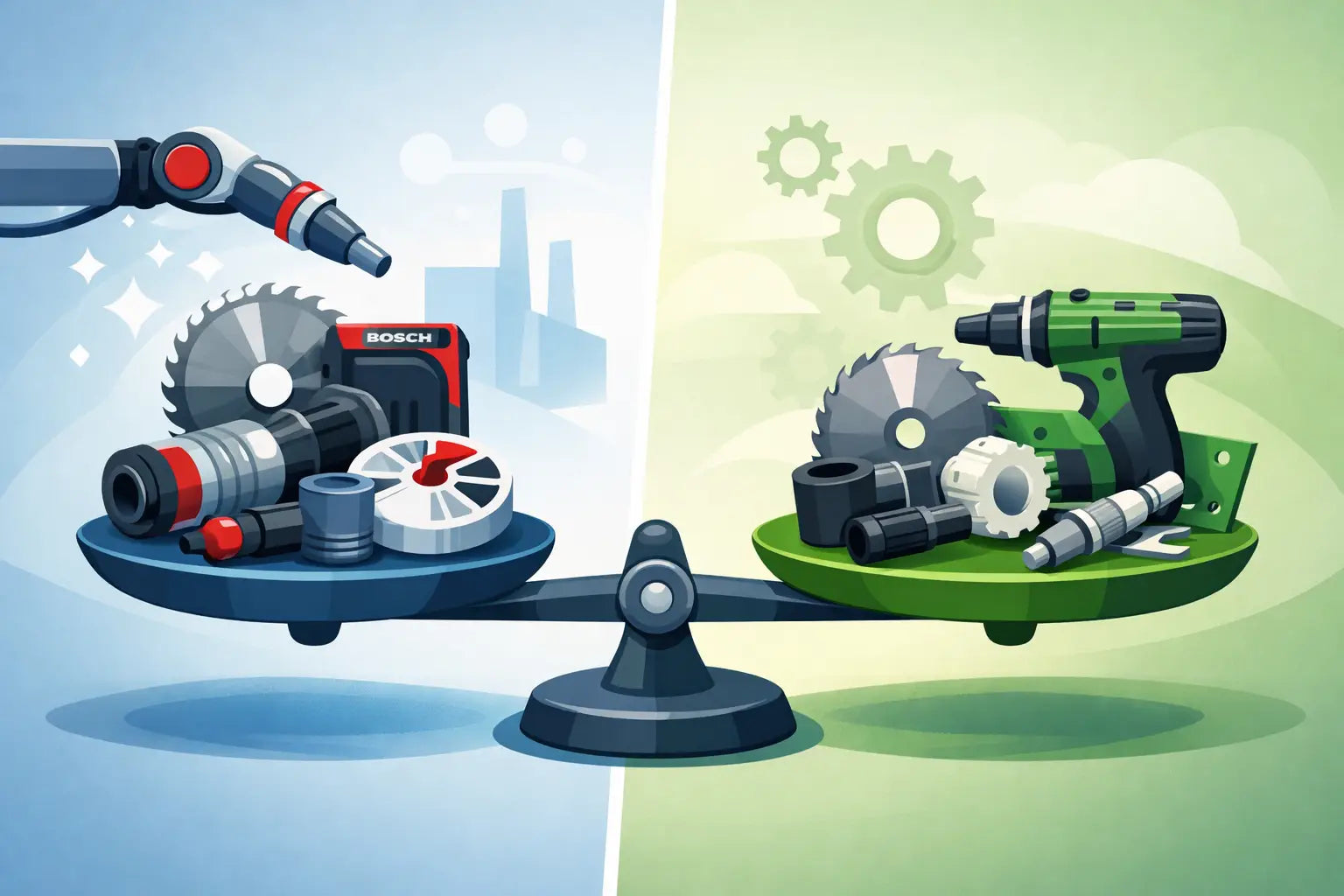
A cracked washing machine door handle or broken fridge shelf can make a perfectly good appliance frustrating to use. When choosing between Bosch spares vs generic parts, the right answer comes down to the part itself, your appliance model and how much certainty you need before fitting it.
Original Bosch replacement parts are made for specific Bosch appliances. Generic parts are designed to work across a wider range of machines, often at a lower price. Both can be sensible choices, but they are not interchangeable in every repair.
Bosch spares vs generic parts: the key difference
A genuine Bosch spare is an original equipment part, made to the specification intended for a particular Bosch model or model range. It should match the original component in shape, fixing points, material and function, provided you have identified the correct model number and version.
A generic replacement part is made by a third party. Some generic parts are universal, meaning they are designed to fit many brands and models. Others are compatible alternatives made to replace a particular type of Bosch part. Quality varies more widely than it does with genuine spares, so it is essential to check the product description and compatibility information carefully.
The choice is not simply original equals good and generic equals bad. A generic washing machine hose, for example, may be perfectly suitable if the diameter, length and connections match. A complicated electronic control board, fitted door seal or model-specific freezer drawer front is a different matter. In those cases, an exact Bosch part is usually the safer route.
When genuine Bosch parts are worth choosing
Genuine Bosch spares are usually the best option where fit and performance need to be exact. This includes parts with specific clips, mouldings, electrical connectors or safety functions. A door catch, appliance control panel, heating component or dishwasher basket rail may look similar to another version, yet differ by only a few millimetres or have a different connection point.
Choosing the original part can save time when you need a repair completed quickly. You are less likely to be modifying fittings, reusing damaged clips or returning a part that almost fits. For a busy household, that certainty can be worth the extra cost.
Original parts can also help preserve the way the appliance was designed to operate. Bosch fridge drawer fronts, for instance, need to sit correctly so drawers open and close properly. A poorly fitting replacement may crack again, catch on the shelf above or leave the drawer difficult to remove.
Genuine spares are particularly sensible when:
- the part is electrical, heat-related or involved in water flow;
- the component is visible and needs to match the appliance finish;
- the item uses model-specific mounting points or connectors; or
- you want the closest possible replacement for the original part.
When a generic replacement can make sense
Generic parts can offer excellent value for straightforward, non-specialist repairs. If a replacement is clearly listed as compatible with your Bosch model, it may restore the appliance at a lower cost without compromising day-to-day use.
Common examples include some drain hoses, feet, knobs, filters, vacuum cleaner accessories and universal appliance fittings. These parts often have standard dimensions and simple functions, which makes compatibility easier to assess. A compatible replacement can be a practical option if the original part is discontinued or difficult to source as well.
The important point is that generic does not always mean universal. A product described as compatible still needs checking against the model number of your appliance. Do not rely on appearance alone. Two Bosch washing machines from the same product family may use different handles, seals or pumps.
Price should be considered alongside the cost of getting it wrong. A lower-priced part is not a saving if it has to be returned, does not fit securely or fails sooner than expected. Read the dimensions, check photographs of fixing points and compare any stated part numbers before ordering.
Check your Bosch model number first
The model number is the quickest way to narrow down the right spare. Bosch appliances commonly use an E-Nr number, often found on the rating plate. Its location depends on the appliance: look around the door frame on washing machines and dishwashers, inside fridge compartments, or on the side or rear of some appliances.
Record the full number, including letters, numbers and any suffix after a slash. Those final characters can matter. They identify the version of the appliance and may determine which replacement part fits.
If you are replacing a removable item such as a shelf, drawer front or door handle, check the old part for a moulded number too. This can provide an additional match, but the appliance model number remains the most reliable reference.
Before placing an order, confirm three things: the exact appliance model, the position of the part on the machine, and whether the listing states it is genuine Bosch or a compatible alternative. This avoids the most common cause of incorrect spare-part orders.
Fit, lifespan and finish: what you may notice
A genuine Bosch component is designed to mirror the original part, so it should give the most predictable fit and finish. That matters for visible components such as cooker knobs, freezer drawer fronts and dishwasher cutlery baskets. Colour tone, plastic texture and handle shape can vary on compatible alternatives.
For hidden components, the difference may be less noticeable, provided the generic part is specified for the job. However, the materials used can affect lifespan. A lower-cost compatible door seal may feel different from the original and may not sit as neatly around the opening. A poorly made replacement can lead to leaks, noise or repeat repairs.
That does not mean every generic option has a short lifespan. Many compatible parts are made for regular household use and offer good value. The sensible approach is to match the part to the repair. Spend more where precision, durability or safety is essential. Consider a compatible option where the specification is clear and the component is simple.
Do not force a part that does not fit
If a replacement needs excessive pressure, the screw holes do not line up, or a plug connector will not seat properly, stop. Forcing a part can damage the new component or the appliance itself. This is especially important with plastic trim, drawer runners, appliance doors and electrical connections.
Take a photograph of the old part before removing it, including its fittings and cable positions where relevant. Keep screws and clips together, and compare the new part against the old one before installation. If the replacement is not an exact match, recheck the model number and part reference rather than trying to make it work.
For electrical repairs, gas appliances and work involving sealed refrigeration systems, use a qualified engineer where appropriate. A replacement part can be easy to buy, but not every repair is suitable for a home installation.
Which option gives better value?
Better value is the part that solves the problem properly without creating another one. A genuine Bosch spare often represents better value for model-specific, high-use or safety-related components because it reduces uncertainty. A compatible generic part can represent better value for basic, clearly specified items where the savings are meaningful and fitment is confirmed.
If you need an appliance back in use quickly, start with the model number rather than the price. A correctly matched spare is more likely to arrive ready to fit and keep your household running normally. Spares Direct Oldham stocks Bosch replacement options alongside compatible alternatives, making it easier to choose the level of certainty and price that suits your repair.
A careful five-minute check of the model and part details is usually all it takes to turn a small appliance fault into a straightforward fix.