
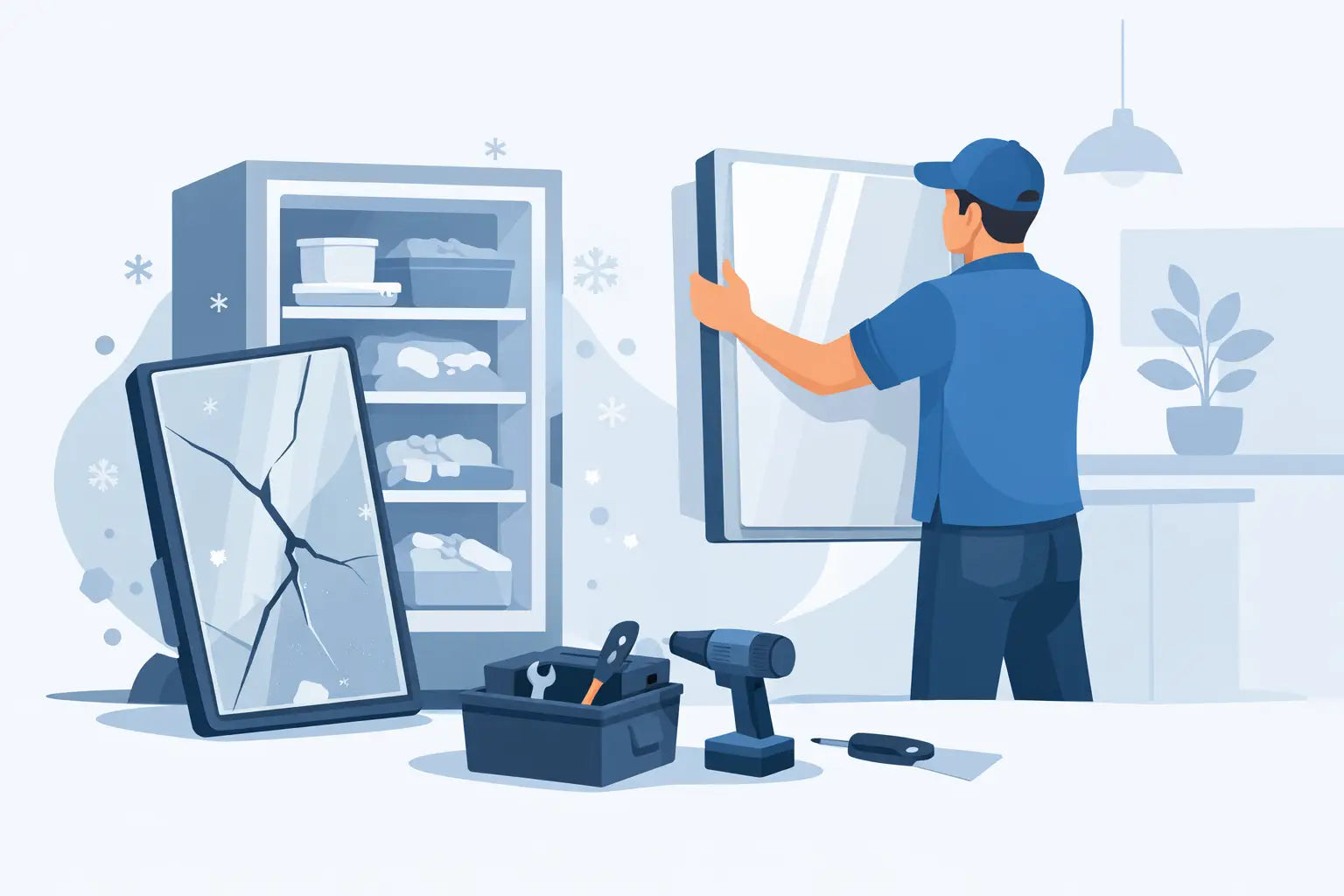
A cracked freezer drawer front usually starts as a small annoyance, then turns into a daily nuisance. The drawer becomes awkward to pull out, the front can loosen further, and before long the freezer looks tired even if the rest of it is working perfectly. This guide to replacing broken freezer fronts is here to help you sort the problem quickly, without paying for a whole new appliance.
In many cases, the clear or white plastic front on a freezer drawer takes the strain long before the drawer body or the freezer itself. Handles snap, clips wear down, and plastic can become brittle over time, especially in busy family kitchens where freezer drawers are opened constantly. The good news is that replacing the front is often a straightforward repair, provided you get the correct part for your model.
Why replacing the front makes sense
If the freezer is still chilling properly, replacing just the broken front is usually the most practical option. It is cheaper than replacing the entire drawer assembly, and far cheaper than replacing the appliance. For many households, it is the kind of fix that restores everyday use straight away.
There is also a compatibility point to consider. Freezer drawers are not universal. Even within the same brand, front panels can vary by model range, production year or drawer position. That is why matching the correct spare matters more than simply choosing one that looks similar in a photo.
A replacement front also helps prevent further damage. When a drawer front is cracked or loose, people often pull from the side or lift the drawer awkwardly. That extra strain can damage the drawer body, runners or surrounding trim. Changing the front early can stop a small issue becoming a more expensive one.
Guide to replacing broken freezer fronts - first check what is actually damaged
Before ordering anything, take a close look at the drawer. Sometimes the visible damage is only on the front panel. Other times, the side walls, base or clips on the drawer body are damaged too. If the front has snapped away from the drawer because the fixing points have broken on both parts, replacing the front alone may not solve it.
Pull the drawer out carefully and inspect where the front connects. On some models, the panel slides into place. On others, it clips on or fixes with tabs moulded into the plastic. If those tabs are intact on the drawer body and only the outer front is cracked, you are probably looking at a simple front replacement.
It is also worth checking which drawer is affected. Top, middle and bottom freezer drawers often use different fronts, even on the same appliance. Ordering by appearance alone can lead to a mismatch, so confirm the drawer position as well as the model number.
How to identify the right freezer drawer front
This is the part that saves time. The best way to find the correct freezer front is by using the appliance model number, not guesswork.
The model number is usually found on a rating plate or sticker inside the fridge or freezer compartment, behind a salad drawer, on the inner wall, or around the door frame. On integrated and upright freezers, it may also be visible near the base once the door is open. If the sticker includes several numbers, look for the full model reference rather than just the brand name.
For brands such as Beko, Bosch and other major household names, small differences in model code can mean different drawer front sizes or clip arrangements. One extra letter at the end of the model number can matter. It is always safer to match the full code exactly.
If your old front is still attached, compare its shape, width and fixing style with the part description. Clear product naming and model compatibility information make the job much easier. That is why many customers prefer buying from a specialist spares retailer rather than taking a chance on a generic listing.
What you need before fitting the new part
In most cases, you will not need a toolbox full of equipment. Replacing a freezer drawer front is usually a simple home repair. A soft cloth or towel, a bowl of warm water and, occasionally, a screwdriver are often enough.
The main thing is to work carefully. Plastic parts that have been sitting in a cold freezer can be brittle. If possible, let the drawer sit at room temperature for a short time before removing the damaged front. This can reduce the risk of snapping clips on the drawer body during the changeover.
It also helps to empty the drawer before starting. Apart from making it lighter to handle, it gives you room to check the runners and remove the drawer fully without spilling frozen food across the kitchen floor.
How to replace a broken freezer front
Start by removing the drawer from the freezer. Most drawers lift slightly and slide out once they reach the end of the runners. Place it on a flat surface with a towel underneath to avoid scratching the plastic.
Next, look at how the broken front is secured. On many freezers, the front panel is clipped into the sides of the drawer body. Gentle pressure at the connection points should release it. If the part uses screws, remove them and keep them somewhere safe for reuse.
Do not force the old front off. If it has cracked badly, pieces may come away separately, but the fixing points on the drawer body still need to stay intact. If a clip feels stuck, check for ice build-up, dirt or a hidden fixing rather than pulling harder.
Once the damaged front is removed, clean the connecting edges on the drawer body. This is a small step, but it helps the new part sit properly. Wipe away any frost, grease or bits of broken plastic.
Then line up the replacement freezer front with the drawer body. Make sure the orientation is correct, especially if the panel has shaped corners or an integrated handle. Press or slide it into place evenly from both sides. If screws are used, tighten them firmly but not excessively, as over-tightening can stress the plastic.
Before putting the drawer back into the freezer, give the front a gentle pull to check it is secure. The fit should feel solid, not loose or uneven. Then slide the drawer back into position and test its movement.
Common problems when replacing freezer fronts
The most common issue is ordering the wrong part. This usually happens when the appliance is matched by brand or appearance rather than full model number. A drawer front may look almost identical but still be the wrong width or have different fixing points.
Another problem is discovering that the drawer body is damaged too. If the clips on the drawer itself are snapped, the new front may not attach properly. In that case, you may need the complete drawer assembly rather than just the front panel.
There is also the question of age. On older appliances, replacement parts can become harder to source. That does not always mean they are unavailable, but model-specific stock matters. A specialist retailer with broad appliance spares coverage is more likely to help you find a suitable match quickly.
When it is worth replacing the whole drawer instead
Sometimes replacing the front alone is the right low-cost fix. Sometimes it is not. If the drawer base is cracked, the sides are warped, or the whole drawer sticks badly on the runners, a full drawer replacement may be the better option.
This is one of those repairs where cost and condition need to be weighed together. If the front is the only damaged part, replacing it is sensible. If several parts are failing at once, fitting a complete drawer may save you repeating the job a few weeks later.
The same applies if the plastic has become very brittle throughout. A brand-new front clipped onto an ageing drawer body can work perfectly well, but if the drawer itself is already weak, the repair may have a shorter life.
Buying with confidence
When you are shopping for a replacement, speed and accuracy matter. Most people looking for a freezer drawer front are not planning a project for next month. They want the freezer working properly again as soon as possible.
That is where clear compatibility information, major-brand coverage and fast dispatch make the difference. Spares Direct Oldham focuses on practical household replacements that help customers restore appliances without unnecessary expense. If you can match the part to the exact model, the repair is often far easier than expected.
A broken freezer front can make the whole appliance feel past it, even when the cooling system is still doing its job. Get the right part, fit it carefully, and you can give the freezer a proper second life with a repair that is quick, affordable and well worth doing.