
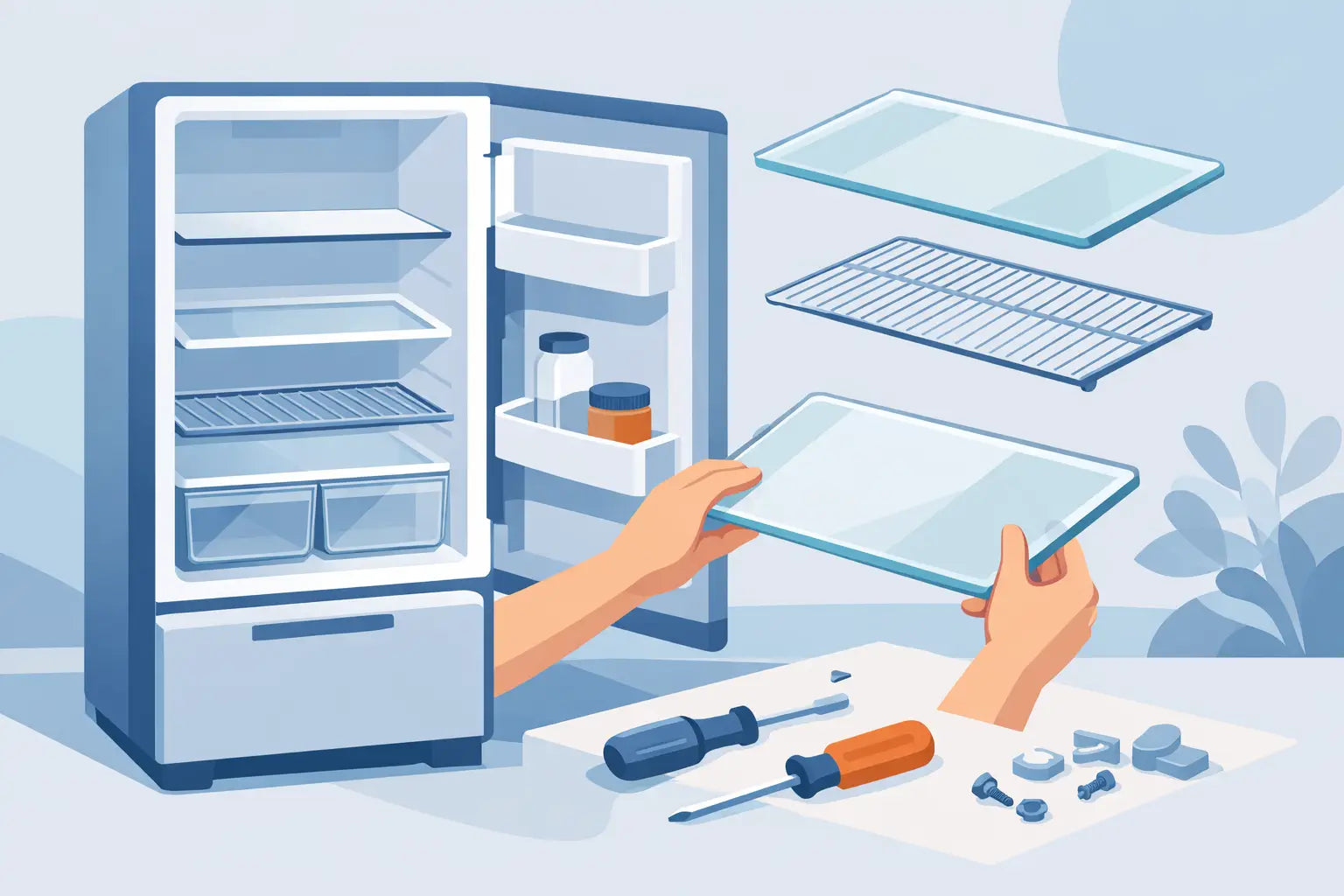
A cracked fridge shelf usually starts as a small annoyance. Then one day it gives way under a milk bottle, jars slide forward, and the whole fridge becomes harder to use than it should be. This guide to replacing fridge shelves is for anyone who wants a straightforward fix without replacing the entire appliance.
For most households, replacing a shelf is a simple, cost-effective repair. If the fridge is cooling properly and the cabinet is in good condition, there is rarely any sense in shopping for a new appliance just because one shelf is broken, missing or badly worn. The key is getting the correct part for your exact model, because fridge shelves can vary more than they appear to at first glance.
Why fridge shelves need replacing
Fridge shelves put up with constant weight, temperature changes and regular cleaning. Over time, plastic trims can crack, glass can chip, and wire shelves can bend or rust. Door shelves are especially prone to damage because they carry heavier items like bottles, sauces and cartons, and they are handled every time the door opens.
Sometimes the problem is obvious. A glass shelf may be shattered or a door bottle rack may have snapped at one end. In other cases, the shelf still looks usable but sits unevenly, no longer locks into place properly, or has stress marks that suggest it may fail soon. Replacing it early can prevent further damage and save the inconvenience of spoiled food or broken containers inside the fridge.
Guide to replacing fridge shelves - start with the model number
The most important step is not measuring the shelf first. It is identifying the appliance correctly. Fridge shelves are usually made for specific models or a narrow group of compatible models, and even small differences in width, depth or mounting points can stop a shelf from fitting.
Look for the model number on the rating plate inside the fridge. In many appliances it is found on an inner wall, behind the salad drawer, near the crisper section, or around the door frame. You may also see a serial number and product code. For spare parts, the model number is the detail that matters most.
Write it down exactly as shown, including any letters, dashes or suffixes. A shelf for one version of a fridge may not fit a near-identical version from the same brand. This is especially common with major manufacturers that release several close model variants over a short period.
If the rating plate has faded or is hard to read, check the user manual if you still have it. You can also inspect the broken shelf itself for moulded part numbers, though that is usually a backup option rather than the main way to confirm compatibility.
Which shelf needs replacing?
Not all fridge shelves are the same, and ordering the wrong type is an easy mistake if you rush. A main cabinet shelf, a salad drawer cover, a wire freezer shelf and a door bottle shelf are all different parts, even if shoppers casually refer to each one as a fridge shelf.
The most common replacements include glass shelves with plastic front trims, wire shelves, door shelves, bottle racks and shelf frames that support a glass insert. Some fridges also use flap-front compartments or dedicated dairy covers that sit within the shelving layout. If only one component has failed, such as the front trim or frame, you may not need to replace the full assembly.
This is where photos, dimensions and model matching all help together. If a part listing states the exact brands and model numbers it fits, that is usually the strongest sign you are looking at the right item.
Measuring helps, but it should not be your only check
Measurements are useful when comparing parts, especially if the old shelf is missing. Width, depth and thickness all matter, and door shelves also need the correct clip or slot arrangement. Even so, two shelves can share similar dimensions and still not fit because of different corner shapes, trim styles or support points.
If you are measuring a glass shelf, measure the glass itself and any attached trim if it forms part of the overall fit. For door shelves, check the distance between fixing points and whether the shelf hooks over the inner door liner. For wire shelves, note the exact shape, not just the rough size.
If you have both the model number and the measurements, you are in a much stronger position to order the correct replacement first time.
Common shelf materials and what to expect
Glass shelves are popular because they are easy to wipe clean and help contain small spills. The trade-off is that they can chip or crack if overloaded or knocked during cleaning. If your fridge uses tempered glass, always replace it with the correct compatible shelf rather than trying to improvise with cut glass.
Wire shelves are generally lighter and less likely to shatter, but they can bend over time and are not always as convenient for small items. Plastic shelves and trims keep costs down and are common in door compartments, but these parts tend to weaken with age, particularly around corners and clips.
There is no universal best option because the material is usually determined by the appliance design. The right replacement is the one built for your model, with the right dimensions and support layout.
How to replace a fridge shelf safely
Step 1: Empty the area properly
Before removing anything, take out food and drinks from the affected shelf and the shelf below if needed. This gives you room to work and reduces the chance of dropping items. If the shelf has already cracked, support it from underneath as you unload it.
Step 2: Remove the damaged shelf carefully
Most main shelves slide out or lift slightly before releasing. Door shelves usually lift upwards to unhook from the moulded door supports. If a shelf is broken, wear gloves and move slowly, especially with chipped glass. Small fragments can lodge in corners and drawer runners.
Step 3: Clean the supports and surrounding area
Once the shelf is out, wipe down the side supports, grooves or rails. Dirt and sticky residue can make a correctly sized shelf seem like a poor fit. It is also worth checking for damage to the fridge interior itself. If the support mouldings inside the cabinet are cracked, a new shelf alone may not solve the problem.
Step 4: Fit the new shelf without forcing it
Position the replacement shelf as the original was fitted. Glass shelves with trims often need a particular front-facing orientation. Slide or lower the shelf into place gently and make sure both sides are level. If it does not sit properly, stop and recheck the part details rather than forcing it. A shelf that needs pressure to fit is often the wrong one.
Step 5: Reload the fridge sensibly
Once fitted, return items gradually and avoid overloading the new shelf straight away. Heavier bottles and large jars are usually better placed lower down or in the correct bottle rack if your fridge has one. Even a genuine compatible shelf will last longer if weight is distributed properly.
When a shelf problem points to something else
Sometimes a broken shelf is not just bad luck. If shelves keep cracking, the fridge may be routinely overloaded or items may be packed too tightly, causing pressure when the door shuts. If a door shelf keeps slipping, worn door liners or damaged mounting points may be the real issue.
It is also worth checking whether drawer fronts, covers or shelf supports have been fitted incorrectly after cleaning. A badly seated crisper drawer cover can place stress on the shelf above it. Solving the root problem helps you avoid ordering the same part again a few months later.
Getting the right part quickly
For most customers, the main priority is simple: find the correct replacement and get the fridge back to normal without delay. That is why model-specific matching matters so much. Searching by brand alone is rarely enough, especially for manufacturers with large product ranges and multiple shelf variations.
When comparing options, look for clear compatibility information, a proper product description and part references where available. If a retailer specialises in spare parts across major household brands, that usually makes the process easier because the listings are built around fit rather than guesswork. Spares Direct Oldham follows that practical approach, helping shoppers find replacements that match their appliance properly instead of relying on close-enough alternatives.
Is it worth replacing fridge shelves?
In most cases, yes. A replacement shelf is far cheaper than a new fridge, quicker to sort than a major repair, and often all that is needed to restore normal use. It is particularly worthwhile when the appliance is otherwise working well and the damage is limited to one shelf or rack.
The only time it may be less straightforward is if several internal parts are broken, the cabinet supports are damaged, or the appliance is already near the end of its life. Even then, many households still choose the lower-cost repair if it buys more time and avoids an urgent replacement purchase.
A fridge does not need to look perfect to do its job, but it does need shelves that are safe, stable and fit for everyday use. If yours are cracked, missing or no longer sitting correctly, replacing the right part is one of the simplest ways to keep the appliance working as it should. A careful model match now saves time, hassle and another broken shelf later.