
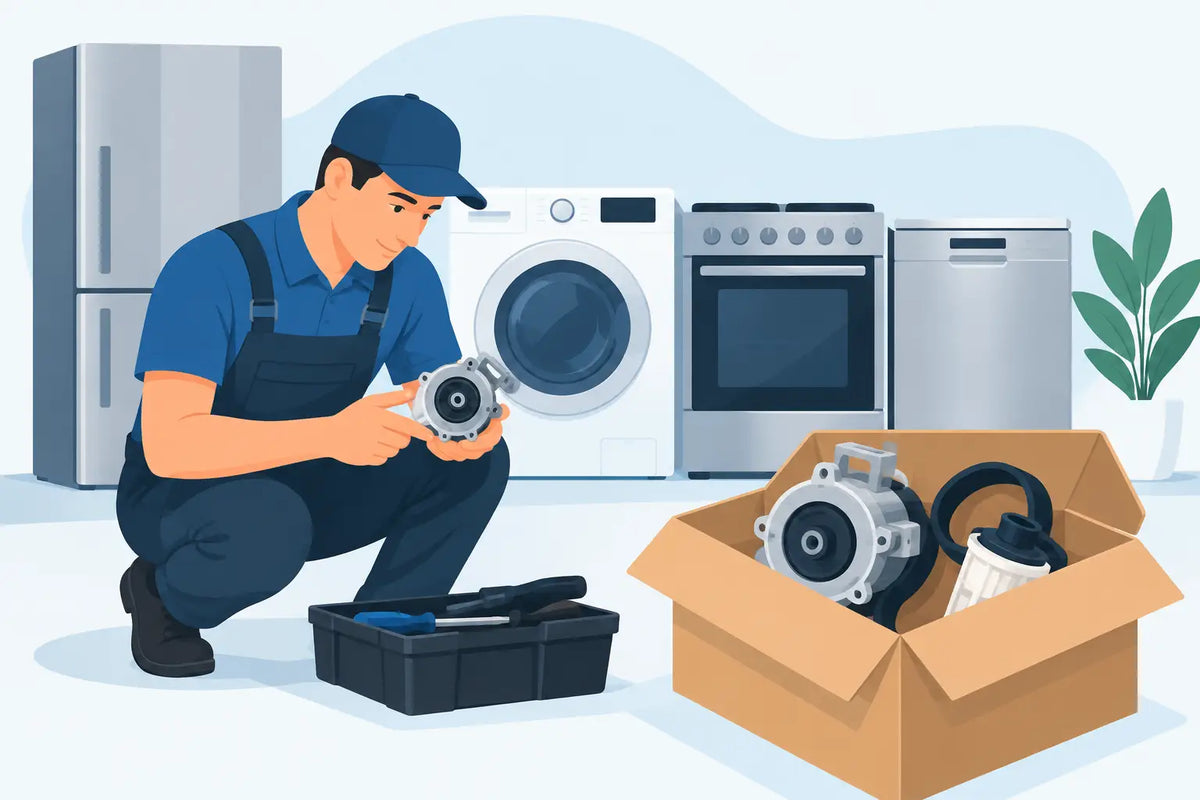
A cracked freezer drawer front, a washing machine door handle that no longer catches, or a remote control that has disappeared down the side of the sofa can make an otherwise useful item feel ready for the bin. In many cases, appliance repair is not a major job. It is a matter of identifying the failed part, checking the model number and replacing one component rather than the whole appliance.
That approach can save the cost and disruption of buying new, particularly when the motor, cooling system or main electronics are still working as they should. The key is being realistic about the fault and precise about the replacement part.
Start appliance repair by identifying the actual fault
It is easy to blame the most visible damaged item, but a quick check can prevent an unnecessary order. If a washing machine will not start, for example, a broken door handle may be the cause if the door is no longer engaging the lock. If the handle works normally, the issue could instead be the door interlock, power supply or control system.
Look first at what has changed. A loose fridge shelf, split drawer front or missing remote is usually straightforward because the part itself is clearly damaged or absent. A machine that leaks, trips the electrics, makes a burning smell or fails to heat needs more care. Switch it off and isolate it from the mains before inspecting anything. Do not attempt a repair involving wiring, sealed refrigeration components, gas connections or internal electrical faults unless you are qualified to do so.
For everyday replaceable parts, use a simple process: check what is broken, find the appliance model number, compare the part shape and fitting points, then order the correct match. Taking a clear photo before removing the old part is useful, especially where clips, runners and small screws are involved.
Find the model number before searching
The brand name alone is rarely enough. Two appliances from the same manufacturer can use different drawers, handles, seals or filters, even when they look nearly identical from the front. Model-specific matching is what turns a hopeful purchase into a part that fits first time.
The rating plate or product label is commonly found inside a fridge compartment, around the washing machine door opening, behind a removable flap, on the back panel or underneath the appliance. Write down the full model code exactly as shown, including letters, numbers and any suffixes. On some products, the production or service number is also needed to distinguish between versions.
Remote controls need the same care. A compatible replacement may cover several TV models and can be a practical answer when the original remote is damaged or missing. Check the TV brand and model number, usually printed on a label at the rear of the set. If choosing a universal remote, make sure it supports the required functions rather than assuming every button will be available.
Which appliance parts are usually worth replacing?
Some parts are designed to wear through normal use. Others fail because of accidental damage, heavy loading or regular opening and closing. These are often affordable repairs that can extend the life of a household appliance for years.
Freezer drawer fronts and fridge shelves are common examples. A cracked plastic front may leave the drawer difficult to pull out, but the freezer itself can still be cooling perfectly. Replacing the damaged front, flap, shelf trim or door bottle rack can restore day-to-day use without the expense of a new appliance.
Washing machine handles, detergent drawers, drain pump filters, feet and selected door components can also be sensible replacement jobs, provided the underlying machine is operating correctly. For Beko spares, Bosch replacement parts and other major-brand components, correct model matching matters more than a part that merely looks similar in the product image.
TV remotes are another clear case for replacement rather than replacement of the device. A remote with corroded battery contacts, cracked buttons or a lost battery cover is frustrating, but it should not make a working television unusable. Before ordering, try fresh batteries and check that the battery contacts are clean. If there is still no response, a compatible replacement is often the quickest route back to normal viewing.
Check compatibility, not just appearance
A replacement part can look right and still be wrong. Drawer fronts may have different clip positions. Washing machine handles can use a different spring arrangement. Remote controls can share a similar layout while operating on a different code set. Product photographs help, but the model number and detailed compatibility information should lead the decision.
Compare the following before buying: the appliance brand and full model number, the original part number if it is visible, the dimensions and fixing points, and the colour or finish where appearance matters. For a white appliance, a slightly different shade may not affect function, but it can be noticeable on a door handle or drawer front.
If an original part is unavailable, a compatible equivalent can be a good choice where it is clearly specified for the model. The trade-off is that a compatible part may not have exactly the same logo, button layout or cosmetic finish as the original. What matters is that it performs the required function and is listed for your appliance.
Avoid forcing a part into place. If clips do not align or a handle needs excessive pressure, stop and check the model details again. Forcing plastic fittings can damage the new part or the appliance panel it attaches to.
Prepare properly before fitting a spare part
Most straightforward appliance repairs take less time when the area is clean, well lit and organised. Disconnect electrical appliances from the mains before removing covers or components. For a washing machine, turn off the water supply if the repair involves an inlet hose, detergent drawer housing or any area where water could escape.
Keep screws in a small container and lay removed pieces out in the order they came off. This is particularly helpful for washing machine door handles, which may contain a spring, pin and latch that need to return in the correct position. For fridge and freezer components, remove food items first and avoid leaving frozen food out longer than necessary.
Plastic parts are usually easier to fit at room temperature. If a freezer drawer front has been stored in a cold garage or shed, let it warm slightly before handling it. Cold plastic can be less forgiving around clips and screw holes.
Once fitted, test the component gently before putting the appliance back into full use. Open and close a washing machine door several times, slide a freezer drawer in and out, or test every important button on a replacement remote. A short check at this stage is easier than discovering a loose fitting later.
Know when a repair is no longer the sensible option
Replacing a visible part is good value when the appliance is otherwise reliable. It becomes less attractive when a major fault is present alongside repeated breakdowns, extensive corrosion, damaged wiring or a repair cost close to the price of a replacement machine.
Age matters, but it is not the only factor. A well-maintained appliance with a damaged handle may be worth repairing even after many years. A newer machine with a failed control board, bearing noise and a leaking seal may need professional assessment before more money is spent on parts.
Safety should always decide the issue. Stop using an appliance that gives electric shocks, emits smoke or burning smells, leaks heavily, has exposed wiring or repeatedly trips the consumer unit. These symptoms are not a case for a quick spare-part swap.
Make a repair that lasts
The best repair is not just one that gets the appliance working today. It also addresses the reason the original part failed. Do not overload freezer drawers, as heavy bags and tightly packed food can strain their fronts and runners. Close washing machine doors by the handle rather than pushing or pulling on the glass. Replace remote batteries before they leak, and remove them if a remote will be unused for a long period.
Cleaning also protects replacement parts. Wipe fridge door shelves and drawer edges regularly so they slide without obstruction. Clear washing machine pump filters according to the appliance instructions, and clean detergent residue from drawers before it builds into a blockage. Small habits reduce stress on the components most likely to crack, jam or wear out.
For UK households, the practical value of a spare part is often speed as much as price. Spares Direct Oldham focuses on helping customers find model-specific appliance parts and compatible remotes without replacing a full appliance unnecessarily. Keep the model number somewhere easy to find, take a photo of the failed part before disposal, and a small household problem can stay exactly that: small.