
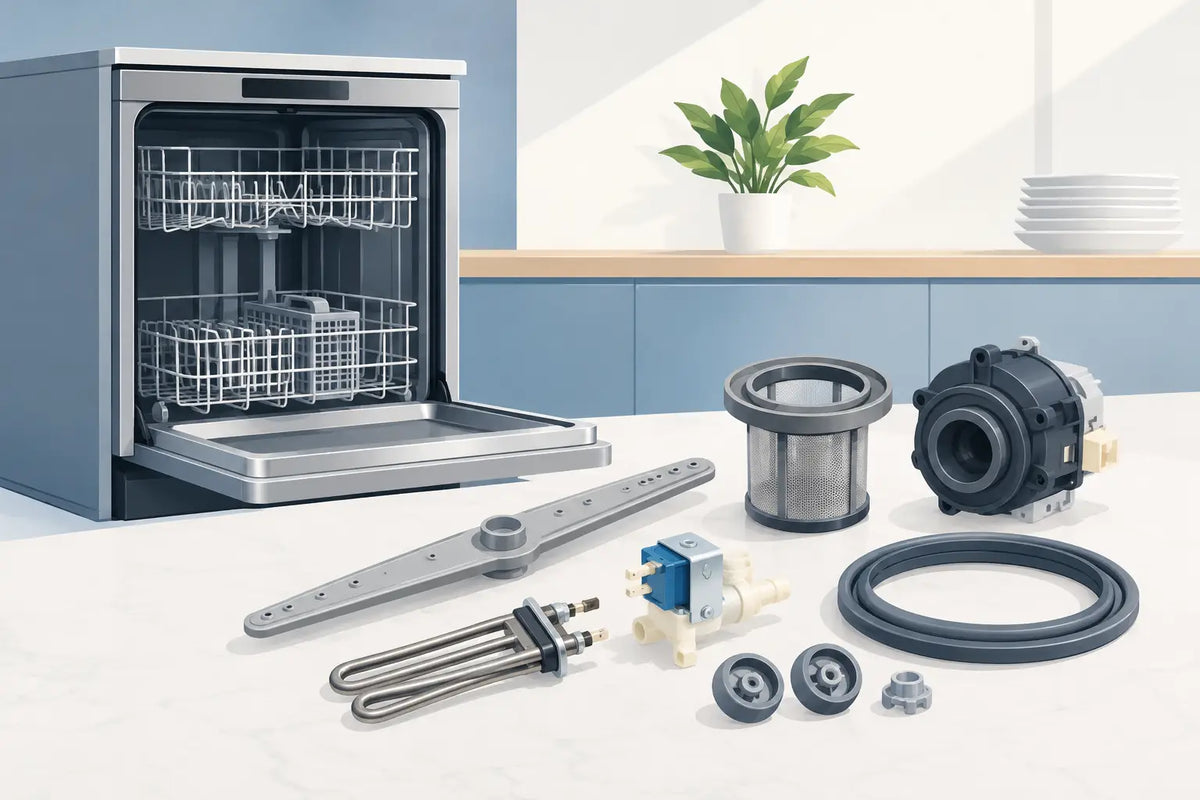
A dishwasher that leaves plates gritty, leaks onto the kitchen floor or refuses to drain does not always need replacing. Often, the best dishwasher spares are straightforward replacement parts that restore the job your machine used to do properly - without the cost and disruption of buying a new appliance.
The key is identifying the actual fault before ordering. A worn door seal and a blocked filter can both lead to water where it should not be, while poor cleaning could be caused by a split spray arm, a failing wash pump or simply a clogged arm nozzle. Start with what the machine is doing, then check the model number so the part you choose is made to fit.
Best dishwasher spares for everyday faults
Some dishwasher parts experience more wear than others. Baskets carry the weight of plates and pans every day, seals are exposed to heat and detergent, and moving parts have to cope with water, food debris and regular use. Replacing the faulty component can make a noticeable difference quickly.
Door seals for leaks and steam
A door seal, sometimes called a gasket, creates the barrier around the dishwasher door. If it becomes flattened, torn, brittle or covered in stubborn grime, water may escape during a cycle. You might notice small puddles at the front corners, drips beneath the door, or more steam than usual around the edges.
Before replacing it, clean the seal channel and inspect it closely. A loose item in the door, an overloaded lower basket or an unlevel dishwasher can also cause leaks. If the seal is visibly damaged or no longer sits neatly in place, a model-compatible replacement is usually the sensible answer. Do not stretch the seal during fitting, and make sure it is pressed evenly into its channel.
Spray arms when dishes are not coming clean
Spray arms distribute water around the machine. Their small holes can block with food particles or limescale, and the arm itself can crack or split. A damaged arm may still turn, but it will not direct water with enough force to clean effectively.
Remove the arm where possible and rinse it through before assuming it needs replacement. A wooden cocktail stick can help clear blocked holes, but avoid widening them. If the arm is warped, damaged at the fitting, or continues to spray poorly after cleaning, replace it with the correct upper or lower spray arm for your dishwasher model.
Filters for drainage and cleaning performance
The filter assembly catches food debris before it reaches the pump. A dirty filter can cause unpleasant smells, standing water, poor wash results and slow draining. It is one of the first parts worth checking when the dishwasher seems to be underperforming.
Most filters can be removed, rinsed under warm water and brushed clean. If the mesh has split, the frame has cracked, or a section has gone missing, fitting a replacement filter helps protect the pump as well as improving day-to-day performance. Check whether your appliance uses a complete filter assembly or separate coarse and fine filters.
Cutlery baskets and dishwasher racks
A cracked cutlery basket is more than an annoyance. Small utensils can drop through broken sections and interfere with the spray arm. Similarly, damaged racks can leave plates unstable, while worn rack wheels make loading the machine awkward.
These are among the most practical dishwasher spares because they can be replaced without dismantling the appliance. For baskets, check the dimensions, handle arrangement and compartment layout. For racks, runners and wheels, the model number matters even more, as fixing points and rail designs differ between machines. If only one wheel has failed, a replacement wheel may be enough. If the coating on a basket has failed across several areas and rust is spreading, a replacement basket is likely better value.
When to replace a pump, hose or valve
Not every fault is visible from inside the dishwasher. If water remains in the base after a programme, the drain filter is clean and the drain hose is not kinked, the drain pump may be the issue. A humming noise without drainage can also point to an obstruction or a failing pump.
A dishwasher that will not fill may have a problem with its inlet hose, inlet valve or water supply. Check the simple things first: make sure the water tap is open, examine the hose for kinks, and look for error codes in the appliance instructions. Parts such as pumps and valves are highly model-specific, so matching by the full appliance model number is essential.
These repairs can be worthwhile, particularly on a machine that is otherwise in good condition. However, they may involve removing panels, handling water connections or working near electrical components. Isolate the appliance from the mains and water supply before any inspection. If you are not confident with the repair, use a qualified appliance engineer rather than risking further damage or a leak.
How to choose the right dishwasher spare
The name of a part is rarely enough to guarantee a fit. Two dishwashers from the same manufacturer can use different wheels, seals or pumps, even when they look nearly identical from the front. The most reliable route is to find the rating plate and copy the full model and product number exactly.
On many dishwashers, the rating plate is found around the inner edge of the door. Open the door fully and check the sides and top edge. It may show a model number, product code, service number or serial number. Take a clear photo before you start searching, as a single letter or digit can change compatibility.
When comparing a replacement, check the part description against your existing component. Look at its shape, number of clips or mounting points, connectors, dimensions and any moulded part number. This is especially useful for spray arms, basket wheels, hinges and dispenser components. A universal part can be useful for certain accessories, but it depends on the item. For a pump, door seal or control-related component, a model-specific spare gives far more confidence.
Avoid ordering based only on the brand name or a photograph. A part that appears similar may fit loosely, prevent the door from closing properly or fail to connect at all. Taking two minutes to check the number on the appliance can save the inconvenience of arranging a return.
Check the cause before buying a replacement
A new spare part will not solve a fault caused by poor loading, detergent residue or a blocked waste connection. Before placing an order, run through a few simple checks. Clean the filter, inspect both spray arms, make sure large plates are not stopping an arm from turning, and confirm the drain hose is not trapped behind the machine.
If dishes are cloudy rather than dirty, the cause may be water hardness, rinse aid settings or old detergent rather than a faulty component. If the dishwasher smells, clean the filter and door seal, then run an empty hot cycle with a suitable dishwasher cleaner. These checks cost little and help you buy only the part you genuinely need.
That said, do not keep using a machine with a damaged seal, exposed wiring, a badly cracked basket or a persistent leak. Small faults can become bigger ones when water reaches the floor, kitchen units or electrical parts. Replacing a worn spare promptly is usually the more affordable choice.
Get more life from the spare you fit
Once the repair is complete, a little regular care can help the replacement last. Rinse the filter frequently, wipe the door seal to remove residue, and make sure spray arms can rotate freely before starting a programme. Do not overload the baskets or force the door shut against protruding pans and plates.
For households in hard-water areas, deal with limescale before it affects spray holes and moving parts. Keep salt and rinse aid topped up where your dishwasher requires them, and use the correct detergent quantity for the programme and load. These simple habits reduce strain on the parts that do the hardest work.
Spares Direct Oldham makes it easier to search for practical appliance replacements when an everyday component has failed. Have your model number ready, identify the fault carefully and choose the part designed for your machine. A correctly matched spare can turn a frustrating dishwasher problem into a repair that is both quick and worthwhile.