
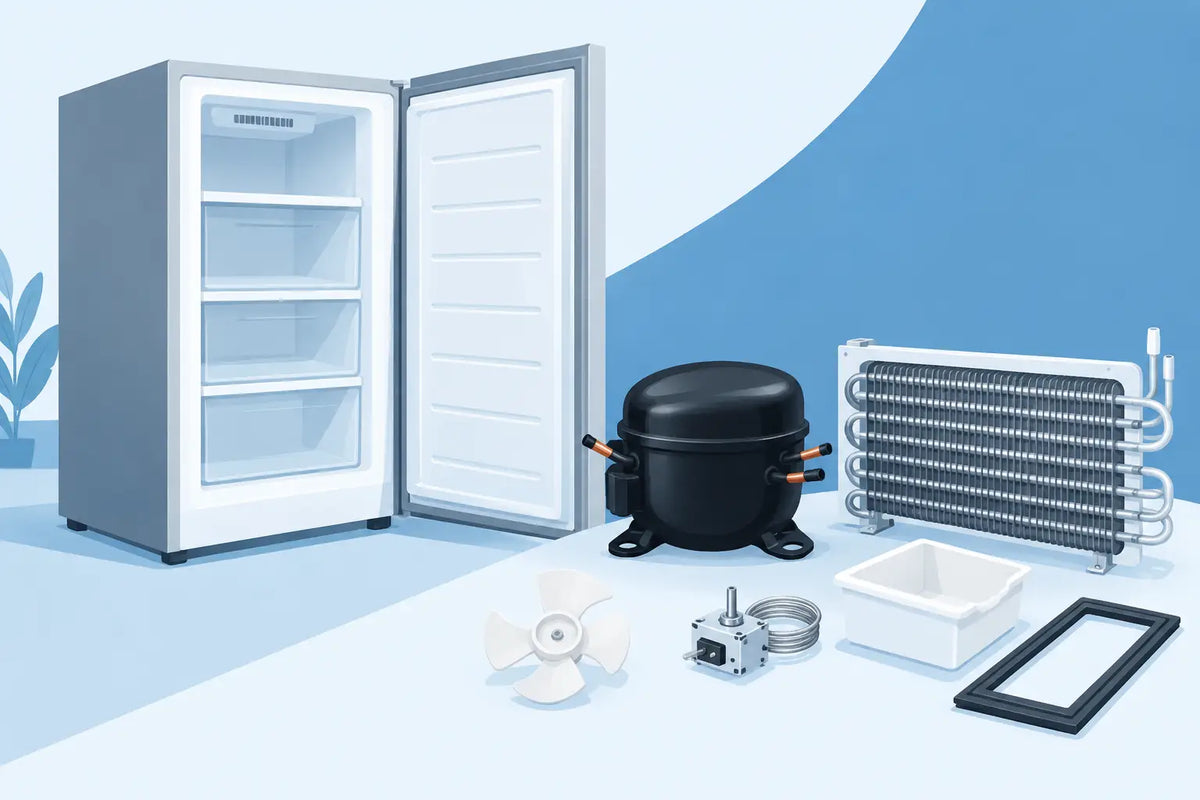
A cracked drawer front, split door seal or missing shelf can make a freezer awkward to use long before the appliance itself has reached the end of its life. The right freezer parts can restore storage, keep food properly organised and help the door close as it should, without the cost and disruption of replacing the whole unit.
For most household repairs, the challenge is not fitting the replacement. It is identifying the correct part first. Freezers from the same manufacturer can look almost identical while using different drawer sizes, fittings and shelf designs. Checking the model number before ordering saves time, avoids returns and gets the repair sorted faster.
Which Freezer Parts Are Worth Replacing?
Many freezer faults are visible and straightforward. Plastic components can become brittle over time, especially drawer fronts and freezer flaps that are pulled regularly when cold. A broken part may be frustrating, but it does not always mean the freezer needs replacing.
Drawer fronts are among the most commonly replaced items. The main drawer body may still be in good condition, while the handle or transparent front has cracked where it clips into place. Replacing the front can be a practical, lower-cost solution and keeps the drawer usable.
Freezer drawers and baskets are also worth replacing when they are badly split, no longer slide smoothly or have gone missing during a house move. The correct drawer helps make full use of the available space and stops frozen food being piled where it can block other compartments.
Door seals are another important replacement part. If the seal is torn, flattened, loose or visibly mouldy, warm air can enter the freezer. This can lead to excess frost, longer running times and difficulty maintaining temperature. A new seal will not solve every cooling problem, but it is a sensible first check when the door no longer closes firmly.
Shelves, shelf flaps, ice trays, handles and door catches can often be replaced individually too. These are small repairs, but they can make a real difference to a busy family freezer that is opened several times a day.
Finding the Correct Freezer Parts for Your Model
The appliance model number is the most useful piece of information when choosing a spare. It is usually found on a rating plate inside the freezer compartment, behind a drawer, around the door frame or on the side of the appliance. On some integrated units, you may need to open the door fully to see it.
Look for the full model reference rather than relying only on the brand name. A number such as the product code, service number or serial number may appear alongside it. The serial number identifies a particular appliance, while the model number is normally the key detail for matching a replacement part.
Before ordering, compare the product description with your existing component. Check its measurements, shape, fixing points and whether it is designed for the top, middle or bottom freezer compartment. Drawer fronts can look similar but have different clip positions. Shelves may have a raised edge, a cut-out or a specific width that matters.
If a part is described as compatible rather than original, that does not automatically mean it is a poor choice. A quality compatible replacement can be a cost-effective option when it is clearly listed for your model. What matters is accurate compatibility and a secure fit.
Do Not Guess From a Photograph Alone
Photographs are helpful for confirming the general shape, but they should not be the only basis for a purchase. Product images may show a compatible range of models, and small differences in tabs or rails are not always obvious on screen.
Measure a damaged drawer or shelf where possible, and compare the fittings carefully. If the old part has a code moulded into the plastic, make a note of it. This can provide an extra reference when finding the correct freezer spare.
Common Problems and the Part That May Help
A freezer door that springs open or needs a firm push may have a worn seal, an overloaded drawer stopping the door from closing, or an appliance that is not level. Start by removing anything that protrudes from drawers and inspecting the seal for gaps. If the seal is damaged, replacing it is usually more sensible than trying to patch it.
A drawer that drops, catches or will not pull out fully may have a cracked front panel, broken side wall or damaged runner. First, check that ice has not built up underneath or behind the drawer. Defrosting can resolve an obstruction, but a split drawer will generally need replacement to prevent it failing completely.
Heavy frost around drawers is not always caused by a faulty freezer part. Leaving the door slightly open, a poor door seal or frequent opening can all contribute. On frost-free appliances, a technical fault in the defrost system may also be responsible. If the freezer is not holding temperature, is making unusual noises or is displaying an error code, a drawer or seal replacement may not be the answer.
Broken handles can sometimes be replaced separately, but on certain models they form part of the drawer front. Check how the handle is attached before buying. A separate handle is usually a quick repair. A built-in handle may require a complete front panel instead.
Fitting Replacement Parts Safely
Simple internal components such as drawers, shelves and ice trays can usually be fitted without tools. Remove food from the compartment first, take out the damaged item and avoid forcing clips or runners. Plastic is less flexible at freezer temperatures, so allow the appliance interior to warm slightly if a part is stuck or iced in place.
For a door seal, switch the appliance off and follow the fitting guidance for the specific model. Some seals push into a channel, while others are secured differently. Clean the door edge before fitting the new seal and check that it sits evenly all the way around. Once the freezer is running again, close the door and inspect for obvious gaps.
Do not attempt repairs to electrical controls, compressors, refrigerant pipes or wiring unless you are qualified to do so. These faults need proper diagnosis. Replacing visible freezer parts is a sensible home repair; working on sealed cooling systems is not.
Make a Freezer Repair Last
A replacement part lasts longer when the freezer is used within its limits. Do not overfill drawers until they bow or force them shut against bulky items. Keep food in bags or containers where possible, as loose packaging can catch on drawer edges and flaps.
Wipe spills promptly and remove ice build-up before it jams a drawer or damages a shelf. If you need to defrost a freezer, never chip ice away with a sharp knife or metal tool. It is easy to crack plastic linings or, more seriously, damage internal components.
When cleaning a door seal, use warm water and a soft cloth, then dry it thoroughly. This helps prevent food residue from affecting the seal and makes it easier to spot early signs of splitting or distortion.
For households that rely on a freezer every day, a missing drawer front or worn seal should not have to turn into an appliance replacement. Spares Direct Oldham helps make these everyday fixes more straightforward with model-specific parts for popular appliances. Take a minute to check the model number, compare the fitting details and choose the part that returns your freezer to normal use.