
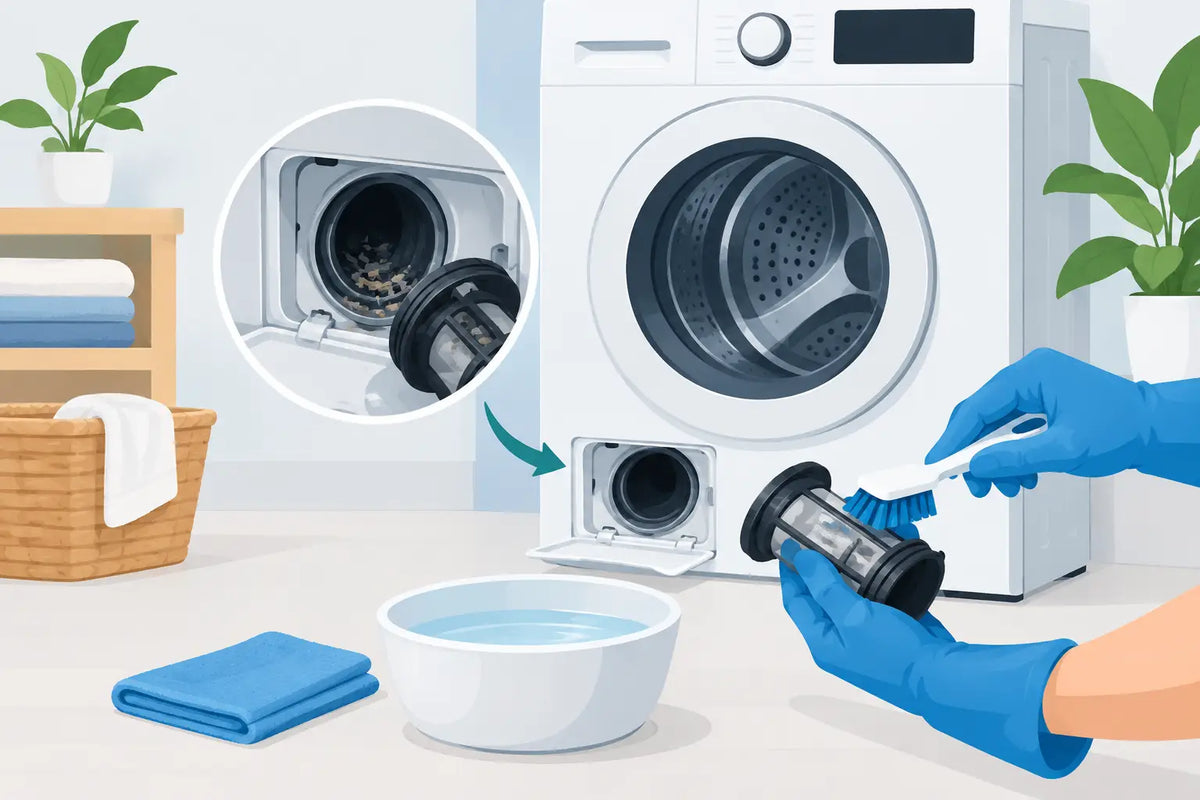
A washing machine that leaves water in the drum, takes longer to drain or gives off a damp smell may simply need one small job: clean washing machine filter debris away. This filter, sometimes called a pump filter or drain filter, catches coins, hair grips, lint and other items before they reach the drain pump. Clearing it can often restore normal draining without the cost or inconvenience of replacing the appliance.
The job is usually straightforward, but it can be messy if you open the filter without preparing first. A little water is expected, especially if the machine has stopped mid-cycle, so take your time and keep towels close by.
Where is the washing machine filter?
On many front-loading washing machines, the filter sits behind a small flap at the lower front of the appliance. It may be at the bottom right or left-hand side, close to the floor. Behind the flap, you will normally find a round screw-in filter cap and, on some models, a narrow emergency drain hose with a small stopper.
Top-loading machines and some newer front-loaders may be different. Certain appliances do not have a user-accessible pump filter at all, while others have a lint filter inside the drum or around the agitator. Check the instruction manual for the model before forcing open any panel. If you need a replacement part, the full model number from the rating label is the safest way to match the correct filter, cap or pump component.
Before you clean a washing machine filter
Switch the washing machine off at the mains and unplug it. Do not rely on the machine being switched off at the control panel. If it has recently run a hot wash, allow it to cool first.
Move any laundry out of the drum and place several old towels, a shallow tray or a baking dish beneath the filter access flap. Even a machine that appears empty can release a surprising amount of water. If your appliance is installed under a worktop or in a tight utility space, leave enough room to manage the water safely rather than pulling the machine out unnecessarily.
If the machine will not drain at all, there may be more water than a tray can hold. Work slowly, emptying the tray as needed. Trying to remove the filter cap in one quick turn is the usual reason for a flooded kitchen or utility room floor.
How to clean washing machine filter step by step
Open the lower access flap. If your model has an emergency drain hose, pull it out carefully, remove its stopper and drain the water into your tray. Refit the stopper securely once the flow has stopped. This makes removing the main filter much cleaner.
If there is no hose, turn the filter cap anticlockwise a little at a time. Let water run into the tray, tighten it briefly if the tray fills, then empty the tray and repeat. Once most of the water has drained, unscrew the filter fully and pull it out.
You may find lint, pet hair, buttons, small coins, tissue, elastic bands or even a stray sock underwire. Remove all visible debris from the filter. Rinse it under a warm tap and use an old toothbrush or soft cloth to clear residue from the mesh and grooves. Avoid sharp tools that could damage the plastic or the sealing edge.
Next, look inside the filter housing with a torch. Carefully remove anything caught in the cavity. You may be able to see the small pump impeller at the back. It should move with slight resistance or in small steps, depending on the design. Do not force it. If it is jammed by an object you cannot safely remove, or it does not move at all after debris has been cleared, the drain pump may need further attention.
Wipe the filter seal and the threaded opening clean before refitting the filter. Screw it in clockwise until it feels snug and properly seated. It should not be cross-threaded or left loose. Replace the access flap, plug the machine back in and run a short rinse and drain programme while checking the filter area for leaks.
How often should you clean the filter?
For most households, cleaning the filter every three to six months is a sensible routine. A home with pets, young children, frequent washing or heavy workwear may need to do it more often. It is also worth checking after washing items with loose fibres, such as new towels, fleece bedding or pet blankets.
There is no benefit in opening a clean filter every week. Repeatedly disturbing the cap and seal can cause unnecessary wear, particularly on older machines. The better approach is to act when the warning signs appear, then build the task into routine appliance care.
Signs the filter may be blocked
A blocked filter does not always stop a washing machine completely. Often, the first clue is a change in how it drains or spins. Watch for these common signs:
- Water remaining in the drum at the end of a cycle.
- A slow drain or a machine that pauses for a long time before spinning.
- Unusual humming while the appliance tries to empty.
- A drain, pump or filter warning code on the display.
- Water leaking from the lower front area or a persistent musty smell.
When cleaning is not enough
A filter cap with a damaged thread, split seal or broken handle may leak even after the filter has been cleaned. In that case, fitting the correct replacement filter or cap is safer than trying to seal it with tape or overtightening it. Overtightening can damage the housing and make a small repair more expensive.
If the filter is clear but the impeller is damaged, the pump makes a grinding noise or the machine consistently shows a drainage fault, the pump itself may be worn or obstructed further inside. Pumps, hoses and filter assemblies are model-specific on many major brands. Check the appliance model number carefully before ordering, as similar-looking parts are not always interchangeable.
For households looking to keep an otherwise reliable appliance running, replacing a worn filter assembly or compatible drain pump can be a practical repair. Spares Direct Oldham helps customers identify replacement appliance parts by brand and model, making it easier to avoid ordering a near-match that does not fit.
Avoiding future blockages
Empty pockets before every wash, especially children’s clothes, jeans and work trousers. Coins, screws, keys and hair grips are frequent causes of filter blockages and can damage the pump if left inside. Fasten bra hooks, use a mesh bag for small items and shake out pet bedding before loading it.
Use the recommended amount of detergent as well. Too much detergent does not make clothes cleaner, but it can leave residue that combines with lint in the filter and drain system. A monthly hot maintenance wash, using a suitable washing machine cleaner where appropriate, helps reduce detergent build-up and odours inside the drum and pipework.
A clean filter is a small piece of routine maintenance, but it can prevent the frustration of a machine that stops with a full load inside. Keep towels nearby, use the model instructions where the design differs, and replace worn parts before a minor drainage issue becomes a complete breakdown.